____________________________________

Sunday, March 22, 2026


Everyone Gets Rejected


By Terry Whalin @terrywhalin

When I opened the email, I moaned internally, “Rejected again.” Several times this past week, I heard from authors where I had championed their book and received a contract from my colleagues. These authors wrote gracious emails to me but the bottom-line was they were going to pass on our Morgan James Publishing contract offer. I understand there are many choices in the publishing world. After decades in publishing, I believe our choice is the best way to get your book into the bookstores.

We are not a self-publisher and Morgan James pays for all of the books that are shipped to bookstores. Any bookstore can keep the book for the lifetime of the book, then return it for a complete refund. Admittedly the economic pressure is on the publisher for this effort and it can amount to thousands of dollars.

As an editor, I do not make the decisions which book we publish but I have a role in that process. The team evaluates the manuscript and decides if we offer a publishing contract. Less than 3% of the 5,000 submissions we receive each year gets a contract offer. There is definitely a consideration process and I champion authors and their manuscript to my colleagues. I get invested in the authors message and their books. Thats why it doesnt feel good when the author decides to pass on our contract offer. Everyone (even editors) get rejected.

On the surface, publishing looks simple and straight forward. Write a manuscript then publish a book. Yet there is a great deal of complexity built into each step in the process. Do you want a traditional publisher with a large reach to readers? Then you need to first find a literary agent because those big publishers will not look at your submission or speak with you? The complications begin with many critical choices along the journey. At the time, you may not understand it is a critical choice until later in the journey.

Also many authors dont understand because of the growth in self-publishing, there are about 11,000 new books that are published every day. This fact amounts to huge competition between authors to find readers and sell their books.

Ive met authors who have invested $6,000 or even $20,000 with publishers and later understand those self-publishers (which they do not call themselves) are only online. Nothing is sold in brick and mortar bookstores. When an author selects these companies to publish their book, they also dont understand they are establishing a public sales record of their book. Many years ago, publishers and agents didnt have access to this information but now they do through an expensive subscription to Nielsen Book Scan. If someone wants to know about your book sales, with a subscription and a few keystrokes they can get the information. These professionals use this sales information to make wise decisions about your manuscript submission. 

For the author, they may not respond (ghost you) or send you a polite rejection letter but these decisions are being made all the time.

At the end of the day, each of us in the publishing community have to make our own choices. Its called free will.

How do you make a wise publishing choice?

The first step is to get educated about the possibilities. I always encourage authors to meet publishing professionals face to face at a writers conference. I meet many author who have never been to a conference. It takes investment, time and energy to attend and make new relationships. Heres a list of some possibilities. In May, I will be at the Blue Ridge Mountains Christian Writers Conference (follow this link to learn more). When you go, meet as many people as you can at meals and in the hallway. Im rarely in my room alone but Im talking with people the entire conference. Ask good questions and bring your business cards and one-page pitches. After the conference, send the editor or agent what they have requested. Many people do not follow through so be the exception.

As you make new relatiohships and explore your options, you will be able to determine your path to publishing.

Heres another resource thats free and you don't have to travel. David Hancock, the founder of Morgan James Publishing, has a new book called The Babylon Blueprint for Authors. Follow this link and get the free Ebook. It has a lot of great marketing insight. The key reason I'm encouraging you to get it is about 40 pages which  compare the three main paths to publish: traditional, self-publishing and hybrid or independent publishing. As you study these details, you will get some clarity about your next steps in the publishing journey.

To show you that everyone gets rejected, I want to finish this article with a reminder. The co-authors of Chicken Soup for the Soul Jack Canfield and Mark Victor Hansen were rejected 140 times. Mark tells the story in the foreword of my book, Jumpstart Your Publishing Dreams. Follow this link to download the foreword and first chapter. They told their small publisher they were going to sell a million books during the first year. Their publisher laughed because they had not sold a million copies of any book. It took Jack and Mark a year and a half to sell their first million books. They practiced the Rule of Five and worked hard to get those readers and booksales. Many authors never take those actions but I encourage you to follow their example and be different.

For you to find the right fit for your book will take work but is possible. If I can help you, let me know.

How does this message that everyone gets rejected resonate with you? Let me know your experience with rejection in the comments below.

Tweetable:


New Podcasts:

In these articles, Ive encouraged you to use PodMatch or some similar tool to book and record podcasts. Last week two more podcast recording launched:


Shilo Creed and I spoke about How to Get a Book Published: What Most Writers Get Wrong on The Authors Mind Podcast. Listen (https://bit.ly/4bdHM9d) or watch at: https://bit.ly/4ryDBJK 


Sharon C. Jenkins (@Sharon_Jenkins) and I spoke about breaking the 10 myths of publishing on the Doing Love Gods Way with Dr. J Podcast at: https://bit.ly/4rE4RGY


Currently I’m working with my third publisher as an acquisitions editor. During these years, I’ve spoken with many authors about their expectations, dreams and desires for their books. I find many unrealistic expectations. Many aspects of the publishing process are outside of anything an author can control. I wrote 10 PUBLISHING MYTHS to give authors practical help. You can get decades of insights in 10 PUBLISHING MYTHS for only $10, free shipping and over $200 of bonuses. 

Subscribe to Terrys Newsletter:

During the last year, once a week I’ve been sending a short free newsletter. Just follow this link to subscribe. When you are added to the newsletter, you will receive a FREE 87-page Ebook which is packed with insights for every writer.

Get these articles on your email

Since 2004, I have blogged about The Writing Life over 1,800 entries and one of the top 27 content writers. With this simple form, each week you can get my new articles, encouragement and insights at: https://t.co/W6uU64u6aA

Labels: , , , , , , , , , , ,

____________________________________

Sunday, March 03, 2024


The Value of Mentoring


By Terry Whalin
 @terrywhalin

Whether we like it or not, the publishing world is constantly in motion and changing. As an example, recently I had lunch with a long-time friend who years ago led a communication team but now is retired. I told him about a few hours earlier when I recorded a podcast interview. He asked, “What is a podcast?” 

I explained a podcast is like radio yet online. With the massive numbers of people podcasting and guest podcasting or listening to podcasts, his question surprised me. Podcasting began twenty years ago. I include this story to remind us the tools of book promotion and getting out our message, continue to evolve. As someone in publishing, we need to be constantly learning and experimenting. Im not encouraging you to chase the newest aspects but we need to be aware of them and use them if appropriate. 

In these articles, Ive often encouraged you to be learning new aspects of the writing life and publishing. Its important for each of us to have a healthy dose of curosity and eagerness to improve our writing. 

Lets move beyond learning for your own sake and ask what you do with this information. When you learn a new aspect of the writing life, how to you pass along this information to others? Some people dont and that is certainly your choice.  Teaching others is a firm part of my DNA. As Ive studied my ancestors, I discovered a long line of teachers. My great grandfather was a teacher. A number of his children including his oldest son (my grandfather) worked in education. In fact, my grandfather was a principal and superintendent at a Kentucky school.

While I didnt study education in college, for many years, I have been teaching others.  Since 2008, the articles in this blog have been one of the places to write the stories and give insight to others. Many of my editor colleagues work with authors on their books yet do not teach at conferences or blog or write how-to books about their craft or any number of other ways to mentor others. Each of these actions take time, energy and on-going commitment.

Some people have become editors and others have started a coaching business. During the editing or coaching process, they mentor others. Others have started or joined a critique group as a way to give valuable insight to others and help their writing craft. Other writers have started a local conference or taught at writers conferences. Mentoring and training happen throughout a conference. Later this month I will be at the Blue Lake Christian Writers Conference (use the link to learn more) which is a smaller event with great opportunity. Others have become university or community college instructors about writing. Im suggesting there are many different ways for writers to pass along what they are learning to others.

Online groups is another way to mentor and teach others about the writing world. In particular, I want to tell you about a Christian group called The Writers View which Suzie Eller started in 2001. She created a unique format for this group. A series of professionals in different areas of the market became leaders or panelists (editors, publicity people, authors, literary agents, etc.). Each week this group will focus on a partiocular topic and discuss it for several days. Then a new topic starts the next week. In over 20 years, a wide range of writing and publishing topics have been explored. The process has created a rich database of information for anyone interested in publishing--whether a beginner or a professional. The panelists / leaders and the participants have varied through the years. Ive been a panelist with this group since the beginning and stayed with it. The size of the group has varied but currently there are about 500 people participating.

Behind the scenes, some of my colleagues have been critical of my involvement in The Writers View. They have viewed my participation as a “waste of time.” Instead Ive seen this online forum as a way to invest in others and pass along some of the lessons and insights Ive learned from my many years in publishing. My continual participation is part of the consistent writer that Ive encouraged in these articles. 
The Wild Card of Mentoring

There is a giant unknown for each of us who mentor or teach others. What is the impact and who have you touched in this process? From my experience after teaching and traveling for decades, it cant be measured or known this side of heaven. Even this past week a much-published author and professional peer thanked me for helping her years earlier during a meeting at a writers conference.  I havent been to the event she mentioned in years so this meeting was decades ago--yet she recalled our conversation. Its part of the joy and value if you teach and mentor others. I encourage each of you to find some method of helping others in their writing journey. 

A common saying is “The road to hell is paved with good intentions.” Actions speak louder than words. What actions are you taking to begin passing along what you have learned about the publishing world to others? Let me know in the comments below. 

Tweetable:

Labels: , , , , , , , , , ,

____________________________________

Sunday, January 21, 2024


Before You Hit Send


By Terry Whalin
 @terrywhalin

As a writer and an editor, I understand the importance of good communication. In fact, if you clearly communicate, it’s one of the simple ways to stand out in the publishing world. From my perspective, the bottom-line of the publishing business is communications. Yet as a writer, I’ve often submitted things with no response or silence. I’ve heard editors say if you don’t hear anything from us in a certain number of weeks, then you can assume we are not interested in your submission. When I hear this comment, it strikes me as poor communication from the professional. I understand that we get thousands of submissions which can be overwhelming. Yet it does not take long to cut and paste a simple response and send it to the author.  

Recently I copied a colleague on a note to an author about an internal matter. This colleague is reading her email because she reached out to me and filled me in on some behind-the-scenes changes which I didn’t know about but were important for my day to day work. I appreciated the communication from my colleague. 

Many of us are working electronically and in this article, I want to give some general guidance and cautions before you hit send.  

Several months ago, Google changed their email and allows you to “unsend” your email (if you do it almost immediately after you have sent something). While I have not used this feature often, I like having this ability to unsend. Also Google gave users the ability to schedule emails. I like using this feature from time to time with my work emails.

As you write an email to someone, make sure you include enough information and not too much detail. Sometimes I will get an email from someone which is several pages in length. Then often I have to read and re-read it to make sure I absorb all of the information. If I have too much going, I will plan to read it later--and sometimes later never happens and I don’t read it. The balance can be tricky but it’s something I encourage you to consider and shoot for with each communication.

Also I use the draft feature with my email. If something comes in which needs to be answered and I can't do it at that time, I will put it into my draft folder to handle later. It’s critical that you check your draft folder from time to time so an important email doesn't get stuck in it. To my chagrin, I have found an email stuck in the draft folder and not sent.

As a writer, there are many different types of writing I send with email. I will send book proposals and manuscripts as attachments--only after I have sent a query and the editor agrees to receive it. Many news agencies don’t open attachments because at times they have a virus or bug. To reach them with your pitch, it is better for you to embed your release or pitch inside the email. 

When you send an email to your newsletter list, before you send it, check and make sure all of the links work. On a recent bestselling author friend’s newsletter where I’m on her list, she included a list of forthcoming speaking engagement and a city with the state abbreviation CS (which was actually SC for South Carolina). The details matter. I have an inexpensive product to help you with your email list called List Building Tycoon (use the link to check it out). 

As an editor, I sent sample contracts and other information as an attachment after I have spoken with an author. Then when our publication board meets and makes a decision about a book, I will also send the contract and other information as an attachment.

If you email someone and don’t get a response, I encourage you to resend it or follow-up about it. Many opportunities are missed because of not following up. 

You can also use google to find other resources on this topic like Your Top-to-Bottom Email Checklist: What to Include Before You Hit Send. What else do you need to consider before you hit send? Let me know in the comments below.

Tweetable:

Labels: , , , , , , , , , , , ,

____________________________________

Sunday, January 14, 2024


Serve Before Asking


By Terry Whalin
 @terrywhalin

Several years ago I was at a conference and in the hallway listening to the director of the conference talking with another leader about a faculty member. This director said, “I encourage you to be cautious about how you use ______. She’s a taker and not a giver.” It was the first time that I’d witnessed this categorization. 

In this article, I want you to consider the importance of your reputation and how you want others to know you. My encouragement is for you to be known as a giver and not a taker. 

In these articles, I’ve encouraged you to get connected to as many people as possible through LinkedIN and through exchanging business cards at conferences or events. It is important to know as many people as possible. As I’ve often said who you know is almost as important as what you know.  On a deeper level, how are you serving or helping those people you meet? 

For example, if you have a new book and are gathering endorsements for this book, how can you serve the person before asking for their help? A simple method is to get their latest book, read it then write a review and promote that review to your social media channels. When you promote the review, use their name, hook it to their Facebook page or their X (Twitter) account or any number of other ways to connect your review and get their attention. 

Then when you reach out for their help, add a sentence in the request about what you've done and even include a link. Don’t overdo it but your message is that I’m a giver and helper to you before I’m asking for your assistance. 

For example, several years ago I read and reviewed a new book from author and journalist Piers Morgan. After my review appeared, I wrote about my review to my social media channels and used his X (Twitter) name in my post. Piers publically thanked me for my review. It’s the only exchange we’ve ever had but it happened through social media. If I can do this sort of reach, you can too. Admittedly it takes some effort on your part but is possible.

In the most basic form to build relationships, you want to give the other person a reason to connect with you instead of making a random request. 

Here’s another important element in the asking process: don’t overask. Narrow your focused ask down to one thing. Recently I received an email request from another writer friend--but it included four or five asks in this email. I read it and almost did not even respond. Yes, I could have ghosted this friend and not responded. That can happen if you ask for too much in a single email. Instead, I did respond but picked the easiest element to do for this friend--and said no to the rest of them. The overask made an impression--but not the one that my friend expected or wanted. 
In what ways can you serve another person before asking for their help? Let me know in the comments below.

Tweetable:

Labels: , , , , , , ,

____________________________________

Sunday, September 17, 2023


Preserve and Expand Your Relationships


By Terry Whalin 
@terrywhalin

Admittedly at times, it is frustrating to be a writer. Ive been rejected and had books cancelled. Internally I moan and groan but I never burn my relationship bridge. To outsiders, the publishing world looks daunting and huge. After decades in this business, instead of huge, I find this world often interconnected and small. Many of us know each other from going to conferences, working on different projects and maintaining our connections. 

For example, Ive been acquiring books at Morgan James Publishing for over ten years. Even earlier, I acquired fiction at Howard Books (an imprint of Simon and Schuster) and before that experience I acquired books at David C. Cook. With each of those positions, I worked with editors and literary agents. Some of those agents Ive not spoken with in years but we maintain our relationships and connections. If I reached out to them via phone or email, I would likely get a response. 

In addition to my publishing work, Ive also interviewed more than 150 bestselling authors and written their stories for over 50 publications.  If you dont have this type of experience, dont be concerned. I didnt begin with these connections but they were built over time and one relationship at a time. Each of these relationships is important. You need to design your own system to keep track of the various emails, phone numbers and other critical information. You never know when you might need to revive one of these relationships.

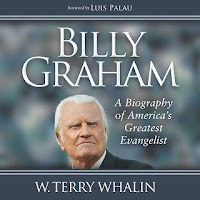
Several years ago I was working on the audiobook version of my biography of Billy Graham. From listening to audiobooks, I was looking for a way to make my audiobook to be “different.” One of the most iconic songs related to Billy Graham is the hymn Just As I Am sung at the end of his crusades. I did a simple Google search and found a YouTube version with the Gaithers singing along with Cliff Barrows and George Beverly Shea. Using an audio program, I clipped out a few seconds but then I needed permission to use it in my audiobook. 

Years before I met and exchanged business cards with Gloria Gaither who was an author with Howard Books. In a few minutes, I crafted an email to Gloria Gaither and told her about my audiobook project. I sent along the YouTube clips and asked for royalty-free permission to use them. Within a few hours, I received the official permission. Each chapter in my audiobook begins with a brief clip from the hymn. If you follow this link, you can hear a sample. From this story, I hope you can see the value in preserving and maintaining relationships. 

One of the ways I have preserved my relationships with bestselling authors was through my unusual practice of pre-publication review. Years ago I learned that I could not control the editing process at magazines but what I can control is what I turn into the publication. Before I submit my articles, I returned to the subject and showed them my article asking them to check the facts. I was careful how I reapproached them because I didnt want them to rewrite my piece but I wanted to make sure it was accurate. When I told Chuck Swindoll about my practice, he affirmed something I knew saying, “The media never checks.

Journalists are taught they control the story and never to let your subjects see the article before it is printed (pre-publication review). Yet I have done it for the simple reason that it preserves and maintains my relationship with these authors. 

Heres some additional action steps everyone can take with their relationships:
--answer your emails
--return phone calls
--follow-up with authors and leads
--check in with others to see how they are doing and how you can help them

This week on social media, I noticed a new book from one of my friends. I reached out to that friend and ask for a review copy of the book so I could read it and write a review. I did not hear from my friend but someone in publicity later that day emailed to say they were mailing the book. The bottom-line is be known as someone who wants to help other people succeed. Look for creative and simple ways you can help them. 

Another wise place to expand and continue your connections is on LinkedIN. For years I ignored the email invitations to connect. Yet today I have over 19,400 LinkedIN connections. If Ive not reached out to someone in a long-time, LinkedIN is my first place to check on their email and sometimes their phone number. Editors, literary agents and writers will often change positions. When they change, they often will take their LinkedIN accounts with them. Recently I needed to connect with an agency for my work. I selected a couple of leaders in this organization and sent them personalized invitations to connect. A few hours later I was connected to one of those two leaders and sent them a personalized email. You can do the same thing on LinkedIN to expand your network. 

Are we connected on LinkedIN? If not, follow this link and send me a personalized invitation (even mentioning this article). What methods do you use to preserve and expand your relationships? Let me know in the comments below.

Tweetable:

Labels: , , , , , , , , , ,

____________________________________

Sunday, July 30, 2023


Kindness Always Counts


By Terry Whalin @terrywhalin

The incident happened years ago when I worked at a different publishing house. I dont recall the author but the reaction of our editorial assistant is seared into my memory as well as the internal discussion.

“What a rude author,” she exclaimed. Our editorial team worked in an area with cubicals and the various editors could easily hear such an outburst. This author made a lasting impression on each of us and marked themselves as someone no one wanted to work with on any additional books. 

While infrequent, these types of conversations happen within the publishing house. In these articles, Im committed to write about my journey as an editor and writer. As writers and authors, we only see our side of the interaction yet with each exchange you are making an impression. Its the focus of this article that kindness always counts.

As an acquisitions editor, some authors submit a second book. To my surprise my colleagues will respond with details about this author like they were not happy with anything we did for them or no way we want to do another book with this author.

From working with different editors and publishers as a writer, I understand many details in the process are outside of our control as authors. Its why I wrote 10 Publishing Myths to give authors realistic expectations and action steps every author can take to suceed with their book. Follow this link for a special offer to get it. 

Heres some insights for authors as you interact with editors and agents:

--Realize every conversation counts. If you are upset or angry or fiesty about something, walk around the block or some action to calm down before you unload on the unsuspecting editor or agent. 

--Publishing Is A Small Circle. While to the outside, the publishing community appears large and diverse, it is actually small and inter-connected. As a member of this community, I understand how we speak with each other online, email and phone conversations. Ive watched one bestselling author couple bounce from publisher to publisher with fewer books selling each time. The difficulties were always someone else rather than the author. These authors have faded from the marketplace and if you asked them probably dont understand it. They would blame others when the challenges are their own actions. 

--Never burn a bridge or relationship. No matter what happens to you, take whatever necessary steps to preserve and continue the relationship. I have a long-time publishing friend who brought me into a publishing deal then months later called to cancel my publishing agreement. The experience hurt and cost me financially--yet my relationship continues with this friend. Since that experience, we've done other work in the publishing community. I encourage you to think about each relationship as you start them and as you continue them. 

--Dont be a knucklehead. While likely unknowingly, some authors have made a bad impression. Internally they may be called a “knucklehead” or something worse. With each conversation you are making an impression whether good or bad. 

It is not easy to write these details but my emphasis and reason for writing them is to affirm kindness always counts. We need each other and I encourage you to keep expanding your relationships within and outside of the publishing community.

As you read my article, what am I missing or what else comes to mind? Let me know in the comments below.

My Recent Articles In Other Places

In various articles, I have encouraged you to publish outside of your blog. Its a practice I do on a regular basis and heres three recent articles as examples:

One of the most important relational skills for every author: An Important Skill for Writers: The Gentle Follow-up.


If you want to be published, every author needs to learn: How To Write What The Editor Wants

On the surface it may seem like a simple distinction but writers need to learn this aspect: The Difference Between a Fiction or Nonfiction Proposal


Tweetable:

Labels: , , , , , , , ,

____________________________________

Sunday, January 22, 2023


The Value of A Template


By Terry Whalin @terrywhalin

As writers, we have many repetitive tasks. There are emails to write, articles to pitch, books to propose and many other forms to fill out. These various templates have value because you dont have to re-invent or create anything. Instead you simply fill out the form. Through the years I have found great value in templates. If there isnt a template that I can get from a program or someone else, I create my own template. 

One of the most common templates would be a printed business letter with the name of your company or your name at the top, then your address, phone and email at the bottom. For any type of document which is repeated, I find it easier to create a template in this process. Several years ago I wrote a detailed article about using a book review template. I've also written about creating a template to get your book into libraries.  To pitch at writers conferences or other times, writers often create a one sheet which is another common template because as authors we dont just pitch one book but many different books. 

Some agents will send their authors a proposal template to make sure the author answers all the variuous parts of a book proposal. Other agents have a distinct template they will pour an author work into before the agent sends it to publishers. The agent does this step to create a brand or distinct look for their publihsher submissions.

Publishers like Morgan James Publishing where Ive worked for the last ten years have a number of templates. For example, we acknowledge every submission with a letter in the mail and use a template. There is an acceptance letter and next steps letter which is a template. The book contract is also a template. We even have specialized contracts for different agencies and agencies because they have negotiated distinct clauses for their writers. Im sure you can see there are many different types of templates and Ive only scratched the surface.

While templates save time and have value, you also have to use them with caution:

1. Before you send it to someone, make sure you have rewritten it and personalized it to that particular person. Otherwise it comes across as canned. 
2. In general I give the form a second and maybe even a third look before I send it. Its one of the advantages to using the "draft" feature in a program.
3. I think about when Im sending an email to someone else and if I especially want them to read it, I make sure the email will arrive during their working hours. Most of the email programs allow you to schedule your email and I take advantage of this feature if Im concerned about such a detail.

While you may use a template for a professional look and to make sure you cover all the necessary details, heres what you should not to forget: you are communicating with another person and you want to connect with that person in the best possible way and make the right impression. Our communication skills as writers is an important aspect of our work.

Do you use templates in your work? Let me know in the comments below.
 
Tweetable:

Do you use templates in your writing life? This prolific editor and author details the value of a template and some cautions. Get the details here.  (ClickToTweet)

My Writing In Other Places:

In these articles, I encourage you to write in different places. In this section, I model such actions.

Searching for the Right Writing Fit 

With the amount of submissions and rejections every writer gets I wrote this article to encourage writers to keep going to find the right fit for their writing.

Five Essentials for Every Book Proposal Last week I was on Your Best Writing Life Podcast talking about these critical elements and I encourage you to listen and take advantage of the resources and information for your writing life.

Every Writer Needs Connections Whether you are new to publishing or have been in it for years, you need the right connections and contacts. I give details about how to grow those contacts.


Labels: , , , , , , , , , ,

____________________________________

Sunday, January 08, 2023


The Payoff For Consistency


By Terry Whalin @terrywhalin

Most of our writing feels unnoticed. We send it out and wonder if anyone is reading or following us. Because of the large volume of submissions, often publishers only response is silence and they dont devote the energy to sending out a rejection letter. What plans do you have for your writing? Are you writing a book that you want to get published? Or maybe you have a personal experience story that you want to get into a magazine? Or maybe you want to build a website or start a blog or begin to be more active on a social media platform. Each of these plans are admirable but how do they happen? It does not happen by thinking about it. You have to sit in your chair, put your fingers on the keyboard and write the words or send the submissions or any number of other things.
 
Successful writers are consistent in their efforts. They take consistent action whether their work is published or read or not. A 50,000 word book manuscript is not written in a single session. Instead the writer writes words into their computer day after day until they complete the manuscript. If they miss a day or something interrupts their writing, they continue to move forward.
 
Because of the volume of articles in The Writing Life, in 2008, I sorted those articles into different categories and created a blook or a book which began as blog articles. While the concept sounds simple, it is a lot of work to transform random articles into a cohesive book manuscript which I called Jumpstart Your Publishing Dreams, Insider Secrets to Skyrocket Your Success. I self-published this book and sold a number of copies. Later when I began to work for Morgan James Publishing, they published the updated edition in 2014. This book contnues to help many writers. I created a free sample at this link.
 
Since 2008, Ive been blogging each week. While I dont get much feedback or many comments about these entries, Ive been consistent in writing then launching them into the world. Overall, it has felt like a limited number of people read these entries but occasionally it pays off. Last week I found my name and blog in this article called 27 Top Content Writers Sharing Their Talents. This article begins saying there are an estimated 600 million blogs online. The article includes a remarkable group of writers like Seth Godin, Ryan Holiday and Jeff Goins—and I was surprised to be included.
 
Also last week, The Writing Life was listed among 100 Best Writing Blogs You Must Follow in 2023. My consistency to write these articles is not with any expectations to be recognized or included in such lists. I write these entries teo encourage other writers and to document some of what I am learning about the writing life. Sometimes my consistency pays off.
 
Do you get these articles on email? If not, you can subscribe here. Also please forward this email on to others and ask them to subcribe. Thank you in advance for your help. While I'm mentioning help, I'll be speaking at a few conferences this year and have updated them on my speaking schedule. I hope you will check the link but also make plans to attend one of these conferences and we can meet in person. I look forward to it.
  
How has consistency paid off for you as a writer? Let me know in the comments below.
 

Labels: , , , , , , , , , , ,

____________________________________

Sunday, January 30, 2022


Get Informed About the Media


By Terry Whalin @terrywhalin

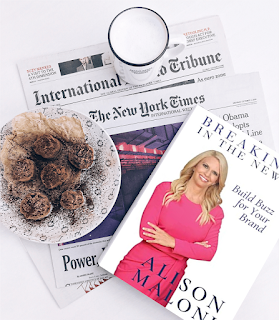
If you have a book or a message or a product that needs to get into the world, where do you learn about how the news media works? There are many different ways and resources but in this article I want to highlight some insights from a new book from journalist Alison Maloni
 
Just like as writers we need to keep the needs of our reader in mind as we write, it's the same with the media. When you pitch a journalist, you have to know where they are coming from and a book like Maloni's book helps you gain this insider perspective. Every business or person selling a product (like a book) needs to reach the media. The media has the ability to reach a broad audience.  Journalist Alison Maloni has been working with the media for decades and pours her experience into the pages of BREAKING IN THE NEWS.
 
In the opening pages, Maloni explains a key fact, “I have put all of my tips and knowledge from being a journalist, publicist, and business owner into this short, simple book—something you can read quickly and apply immediately to your business. While there is a ton of information here, it is only good if you do the work. It is all up to you, and if you put in the work, I guarantee you will see an increase in your media exposure.” (Page 5)
 
Each chapter is packed with valuable insights and ends with a “Chapter Roundup” which highlights the action points. Scattered throughout the book are “Pro Tips” from other journalists and media experts. Whether you want to understand the difference between publicity and advertising or why local publicity can prepare you for the national stage or how to write the perfect pitch, you will find valuable insights in these pages.
 
Here's some more nuggets in this book: “You can and should have goals to be in the big media outlets, but I want you to think about starting small and having realistic goals in the beginning. PR takes time.” (Page 24) or “As a former local news reporter and now contributor and ahchor for a national news outlet, I have had the chance to sit in on editorial and producer meetings. Unless you are in the newsroom, it's hard to understand how the crazy world of news works. It is not like any other industry, and it's very important to know how the industry works before you pitch them. If yuou have that first-hand knowledge, the local reporter and assignment editors will recognize it, and that's bit bonus points for you.” (Page 27)
 
When you get the interview or program, Maloni writes, “If you say yes and do a good job, they will look to call you for the next time they need an expert in your industry to speak to. The reporter will even share you rcontact infcormation with other reporters in the newsroom if they are looking to do a story related to your industry.” (Page 33)  If you get this book, I encourage you to mark pages and highlight, then go back and do what Maloni says in her opening pages: “do the work.”
 
Understanding the perspective of the media is a terrific first step and this sort of valuable insights fills the pages of BREAKING IN THE NEWS: BUILD BUZZ FOR YOUR BRAND. I found the information approachable, easy to understand and apply and well-written. Every writer can profit from a careful reading and application of this book. Also I encourage you to follow Alison Maloni on Twitter or Facebook or LinkedIn. Her short video series that she calls “The Tip of the Day” is also filled with ready to apply insights.

The first step when you approach journalists or anyone in the media is understanding what they need then delivering it to them. How are you developing your relationships with journalists and others in the media? Let me know in the comments below.
Last week, a podcast launched that I recorded with bestselling author Christine Kloser about why every author needs a book proposal (even if you self-publish). I encourage you to follow this link and listen to it.
 

Labels: , , , , , , , , , , ,