____________________________________

Sunday, September 06, 2026


Make the Right Writing Connection


By Terry Whalin @terrywhalin

As book authors, the emails blast into our mailbox. Throughout my day I receive many of these email pitches. They write me about books that I wrote years ago and are often out of print. Other emails are for books where I was the co-author. With additional emails, they pitch me to promote a book which I wrote as a work-made-for-hire (no ongoing royalties). The authors of these emails claim to be editors or literary agents or bestselling authors or publicists or ??? How do you sort through it and figure out which ones are real and which ones are simply artificial intelligence bots?

It isnt easy to know sometimes. Last week, a long-term friend called me about an email he had received from an editor and known publisher. The email appeared legit and talked about the editors interest in a book which he had published years ago and was now out of print. I encouraged him to research then use caution in his response. 

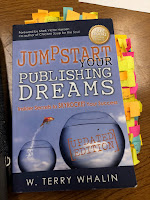
Recently I received an email asking for an interview from a Texas radio station regarding my Jumpstart Your Publishing Dreams. This book is my only self-published book and when it was created I worked hard to have every element in a traditional book through the endorsements, design, publisher logo and even included cartoons in every other chapter. Now the revised edition is a Morgan James Publishing book and available in bookstores everywhere. Follow this link to see a sample.

Because of my greater emotional attachment to this book, when I read the email, it looked legitimate. When I searched, I located the sender on LinkedIn. Her profile raised some questions for me because it had no photo. Normally if the person is real and using LinkedIn, the individual will include an actual photo. On a different website about the radio station, I located a photo of the sender and decided to answer. I exchanged several emails with this person and on the second or third one when we agreed on a time to speak. She explained about a $100 administrative fee (red flag). 

Through the years dozens of radio stations have interviewed me about my books. None of them have charged an administrative fee. Its the same in the podcast area where Ive been on over 80 podcasts with no charge. I emailed the Texas radio interview and cancelled our interview. I learned the hard way not to respond to these questionable pitches--and I encourage you not to do so either.

Some Basics about these emails

1. You do not pay for a podcast interview or radio broadcast or media introduction. Nor do you need to pay for an introduction to a community of readers.

2. Use your common sense and ask yourself some questions. Why is this person reaching out to you about this book? Do they include a real website link and even a phone number with their email? Consider their agenda and whether it is a common pitch.

3. Type the persons name into a search engine and see what you learn before responding.

4. Type the persons name into LinkedIn. I found the person in Texas without a photo. I requested to connect with this person and did not receive any response (another red flag). I have thousands of LinkedIn connections and have used this site for years. 

Some Typical Ways to Connect

1. Meet the person at a writers conference and exchange business cards. This personal connection will evaporate these fake email pitches. As an editor and former literary agent, I frequently email, call and sometimes text with authors Ive met at an event. 

2. Ask someone else who knows this editor or agent or media person to introduce you. Ive hired publicists and marketing experts to help me and introduce me to other professionals. These connections are developed through years of hard work and straightforward connections. 

Each of us need connections with others but it needs to be the right writing connection. What other steps am I missing in this article? What experiences have you had with these email pitches? I look forward to reading your comments.

Tweetable:


New Podcasts:

In these articles, Ive encouraged you to use PodMatch or some similar tool to book and record podcasts. Last week two more new podcast recordings launched:


Dominic and I spoke about 10 Publishing Myths Every Author Needs to Know on Hidden Secrets in Books Podcast. Listen at: https://bit.ly/4h4X4Qp


Book coach and author Natasha Tynes (@NatashaTynes) and I spoke about “Nobody is coming to save your book” on the Read and Write with Natasha Podcast at: https://tinyurl.com/yba53yw7 


A key part of the writing life is a word I don’t really like but do: the discipline of consistently writing. A blog is an important part of this process for me. Many authors have an unrealistic idea about the details of publishing. 10 PUBLISHING MYTHS is a practical easy reading book to help you. Get my decades of insights in 10 PUBLISHING MYTHS for only $10, free shipping and over $200 of bonuses.

Subscribe to Terrys Newsletter:

During the last year, once a week I’ve been sending a short free newsletter. Just follow this link to subscribe. When you are added to the newsletter, you will receive a FREE 87-page Ebook which is packed with insights for every writer.

Get these articles on your email

Since 2004, I have blogged about The Writing Life over 1,800 entries and one of the top 27 content writers. With this simple form, each week you can get my new articles, encouragement and insights at: https://t.co/W6uU64u6aA

Labels: , , , , , , , , , , ,

____________________________________

Sunday, December 17, 2023


Control What You Can


By Terry Whalin
 @terrywhalin

Much of our world is outside of our control--especially if you are going the traditional publishing route. Many authors have unrealistic expectations or myths about their publishing experience. For 10 Publishing Myths, I focused on ten of these myths and you can use this link--or the one at the end of this article to get the book for only $10 including the postage. Each chapter ends with practical steps every reader can take to control what they can in the publishing process or take their own action.

Through the years, Ive built an active presence on social media with thousands of connections. In these articles, Ive written about my actions where I spend limited time on the social media sites where Im active (X or Twitter, Facebook and LinkedIN). I do not control these websites which are called rented media yet in general I post on these sites 14 to 15 times each day. Its a pattern that I've been doing consistently for years. 

In this article, I want to point out two simple yet important actions I regularly take on two different social media platforms. 

First, lets turn to Facebook. On my personal Facebook page, there is a limitation of 5,000 friends. Im fairly close to that limit. Several times a week, people will add a comment to my post saying Facebook has suggested friendship and request a connection. Yet I dont have room for such a connection. Heres the actions I take each time:

1. I block this person so they will not be able to see my posts or get such a suggestion from Facebook in the future.

2. After the block, I delete their comment from my post.

This action can be done quickly but shows that you are monitoring your feed and account--or controlling what you can in this area.

Second, lets talk about LinkedIN. I have over 19,000 connections on LinkedIN and have written about the importance of these relationships with editors and other publishing professionals. My public site says that I have over 500 connections but my number of connections is much larger.

Often I will get a request on LinkedIN to connect. In each case, I look at the profile of the person making the request. Do I know this person? Are they in a part of the world where I want to have a connection? For example, if they are in a foreign country, do I want a connection with this person? In many cases, I am not interested and will decline the request--and also tell LinkedIN I do not know this person. The notification of not knowing this person will be reported back to LinkedIN.

I also look at the occupation of the person making the request. Frequently I receive requests from real estate agents and people in the financial services industry. I do not need any connection from either industry so I decline the request. 

Some of these requests I will accept and make a connection. Then I will be watching to see what the person does with this connection. Frequently I get some standard email introduction asking for me to schedule a 15 minute phone call to chat with them. I'm not interested in such a chat. I rarely use LinkedIN email because with thousands of connections it is not an effective communication tool--for me. I will send a short response expressing these details. Then heres my final step which I wanted to write about: I block this person and remove them from being a connection or being able to communicate with me through LinkedIN in the future. 

Such interaction is not worth the agony or mental anguish. Yes, build relationships on these social media sites. These relationships are important to every person in the publishing business. Each of us have the same amount of time. My encouragement is for you to control what you can and let the rest go. What steps are you taking in this area of controlling what you can? Let me know in the comments below.

Tweetable:

Labels: , , , , , , , ,

____________________________________

Sunday, December 10, 2023


Practice Age-Old Wisdom

By Terry Whalin @terrywhalin

During this time of year, activities tend to slow down--less activity on the publishing front and phone calls are not returned, etc. I use this time to read some books and complete some online courses. While Ive been in publishing for years, I have a great deal to learn and more improvements to make in my own storytelling and writing life. 

Many authors are looking for the magic bullet to propel their books on the bestseller list. These people are often chasing the latest shiny marketing tool or social media network. If you are listening to such information, you can easily find yourself pulled in many different directions. I understand why publishers are looking for authors with a presence on the internet and social media connections. They want authors who will use these different methods over and over to tell their readers about their work. From my view, social media is all about repeat exposure. Someone has to hear about your book at least ten or twelve times, before they will purchase your book. You tell them about your book in different ways such as through a radio broadcast or a podcast or a magazine article or ???. If you want to see or need an example, just follow my Twitter feed or LinkedIN feed and you will see how I talk about my books using diverse methods on a consistent basis. 

As I listen to training programs and learn, there is a repeated emphasis on returning to the basics--email. Why is a vital and effectively used email list much better than the shiny new platform? The simple fact is that as an author, you control your email list as far as the frequency of use and your efforts to grow and expand your list of readers. I dont control the spaces which are commonly referred to as “rented platforms.” 

For any of these social media platforms like Facebook, X or Twitter, LinkedIN and many others, if I violate (even unintentionally), my account can be cancelled or suspended. These rules that are violated are often buried in the settings and almost impossible to appeal or get reinstated because the restoration process is outside of what the author can control. Youve spent untold hours building a group of readers on Facebook then one day your account is suspended. Or your level of response and visibility radically drops because the site has changed their algorithm (which few people understand and almost no one can do anything about). 

Your own email list is what you can control, build and repeatedly use. Do you have an email list and are you effectively using it? Several years ago I created a simple and inexpensive ebook on this topic called List Building Tycoon. If you havent seen it, I encourage you to follow the link or click the small image and check it out. 

Ive not been using my own email list with the greatest effect. Particularly in the new year, I plan to increase my use of my email list and have some specific actions that Ive relearned from these courses that Ive been watching. Each of us have to learn these skills then put them into practice. Its an action step which I encourage every author to do in the days ahead. There are reasons the age-old wisdom works. 

Our life as a writer is a journey. Which age-old wise practices are you not putting into practice?   Let me know in the comments below.

Tweetable:

Labels: , , , , , , , , , ,

____________________________________

Sunday, September 17, 2023


Preserve and Expand Your Relationships


By Terry Whalin 
@terrywhalin

Admittedly at times, it is frustrating to be a writer. Ive been rejected and had books cancelled. Internally I moan and groan but I never burn my relationship bridge. To outsiders, the publishing world looks daunting and huge. After decades in this business, instead of huge, I find this world often interconnected and small. Many of us know each other from going to conferences, working on different projects and maintaining our connections. 

For example, Ive been acquiring books at Morgan James Publishing for over ten years. Even earlier, I acquired fiction at Howard Books (an imprint of Simon and Schuster) and before that experience I acquired books at David C. Cook. With each of those positions, I worked with editors and literary agents. Some of those agents Ive not spoken with in years but we maintain our relationships and connections. If I reached out to them via phone or email, I would likely get a response. 

In addition to my publishing work, Ive also interviewed more than 150 bestselling authors and written their stories for over 50 publications.  If you dont have this type of experience, dont be concerned. I didnt begin with these connections but they were built over time and one relationship at a time. Each of these relationships is important. You need to design your own system to keep track of the various emails, phone numbers and other critical information. You never know when you might need to revive one of these relationships.

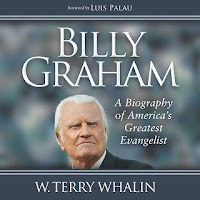
Several years ago I was working on the audiobook version of my biography of Billy Graham. From listening to audiobooks, I was looking for a way to make my audiobook to be “different.” One of the most iconic songs related to Billy Graham is the hymn Just As I Am sung at the end of his crusades. I did a simple Google search and found a YouTube version with the Gaithers singing along with Cliff Barrows and George Beverly Shea. Using an audio program, I clipped out a few seconds but then I needed permission to use it in my audiobook. 

Years before I met and exchanged business cards with Gloria Gaither who was an author with Howard Books. In a few minutes, I crafted an email to Gloria Gaither and told her about my audiobook project. I sent along the YouTube clips and asked for royalty-free permission to use them. Within a few hours, I received the official permission. Each chapter in my audiobook begins with a brief clip from the hymn. If you follow this link, you can hear a sample. From this story, I hope you can see the value in preserving and maintaining relationships. 

One of the ways I have preserved my relationships with bestselling authors was through my unusual practice of pre-publication review. Years ago I learned that I could not control the editing process at magazines but what I can control is what I turn into the publication. Before I submit my articles, I returned to the subject and showed them my article asking them to check the facts. I was careful how I reapproached them because I didnt want them to rewrite my piece but I wanted to make sure it was accurate. When I told Chuck Swindoll about my practice, he affirmed something I knew saying, “The media never checks.

Journalists are taught they control the story and never to let your subjects see the article before it is printed (pre-publication review). Yet I have done it for the simple reason that it preserves and maintains my relationship with these authors. 

Heres some additional action steps everyone can take with their relationships:
--answer your emails
--return phone calls
--follow-up with authors and leads
--check in with others to see how they are doing and how you can help them

This week on social media, I noticed a new book from one of my friends. I reached out to that friend and ask for a review copy of the book so I could read it and write a review. I did not hear from my friend but someone in publicity later that day emailed to say they were mailing the book. The bottom-line is be known as someone who wants to help other people succeed. Look for creative and simple ways you can help them. 

Another wise place to expand and continue your connections is on LinkedIN. For years I ignored the email invitations to connect. Yet today I have over 19,400 LinkedIN connections. If Ive not reached out to someone in a long-time, LinkedIN is my first place to check on their email and sometimes their phone number. Editors, literary agents and writers will often change positions. When they change, they often will take their LinkedIN accounts with them. Recently I needed to connect with an agency for my work. I selected a couple of leaders in this organization and sent them personalized invitations to connect. A few hours later I was connected to one of those two leaders and sent them a personalized email. You can do the same thing on LinkedIN to expand your network. 

Are we connected on LinkedIN? If not, follow this link and send me a personalized invitation (even mentioning this article). What methods do you use to preserve and expand your relationships? Let me know in the comments below.

Tweetable:

Labels: , , , , , , , , , ,

____________________________________

Sunday, September 25, 2022


How To Have Perfect Timing


By Terry Whalin @terrywhalin

Much of the publishing world is outside of our control as writers. Publishers, editors, agents, retailers and readers are just a few of the key decision makers in the publishing process. As someone who writes for a variety of places and works in the community as an acquisitions editor, occasionally I see internal dynamics which will make a decision go against the author instead of in their favor to get published.
 
Here's a recent example, an author submitted an excellent book which was appropriate for our publishing house. In addition this author was committed to spending a large and explicitly stated amount of money on the promotion of this book. Yet when my colleagues looked at the details, the manuscript was large and in fact when moved into production was going to be over 400 pages. My colleagues asked me to return to the author and see if he would be willing to reduce the book manuscript to something with a higher likelihood greater book sales or possibly split it into two books. When I spoke with the author, he was unwilling to reduce it or split it. This stance became a red flag warning that he was not coachable and would likely be a “difficult” author. Despite the large promotion money, my colleagues decided to pass on publishing this book.
 
I'm telling you this story for several reasons. Publishers are looking for authors but the right authors and publishers also have experience about what sells and doesn't sell in the marketplace. As a writer, you show them something through your response. In this case the author revealed his lack of flexibility and willingness to learn from the publisher. The publisher made their decision from this interaction.
 
Because there are many details that can be seen and unseen outside of your control as a writer, how can you have perfect timing? 
 
1. Be active pitching your ideas and book proposals. Whether it is a guest blog post or podcast or radio show interview or speaking at an event or publishing a book, the author (or their representative) has to be pitching them. You have to be actively pursuing these opportunities because in general they will not come to you through passive activity.
 
2. Be consistently meeting new people. As writers we need to be constantly expanding our network and connections. As I've often written in these entries, who you know is as important as what you know.  It's one of the reasons I continue to expand my connections on LinkedIN. Last week I spoke with an experienced editor who called me and was referred from another friend. I spoke with this editor and also we connected on LinkedIN.  This editor was looking for either a full-time position or freelance work. I noticed his small number of connections on LinkedIN and encouraged him to expand them.
 
3. Seize and follow-up, when an opportunity comes across your desk (for anything). You must actively do something.  Your activity and consistency is one of the critical elements for finding and having opportunity.
 
4.  Learn new aspects and continue to experiment. You must apply what you are learning to your writing life. There are many different paths to success. You can learn from many different sources such as live events, reading books, reading online, taking courses and much more. Be committed to continually learning.
 
You can't control anyone other than yourself. Take your own responsibility and get out there. Like the author Paul Little said, “God can't steer a parked car.” The timing for many parts of publishing is simply outside of our control. Your consistent action and perserverance will be the difference maker. Many others will give up and yet you continue. Then some day your timing will be perfect.
 
I'd like to have perfect timing and the only way I've found achieve it is to take consistent action. What insights have you found to have perfect timing? Let me know in the comments below.
 

Labels: , , , , , , , , , , ,

____________________________________

Sunday, April 03, 2022


Where Is the Easy Button for Publishing?


By Terry Whalin @terrywhalin

Writing is easy. You sit at your keyboard, open a vein and bleed. This statement has been attributed to Ernest Hemingway. On the surface, publishing looks easy. You write a book and publish it. People are looking for something easy—an easy button. One of my friends, Joel Comm, was selling easy buttons that you could have on your desk and push when you needed it. Yet the button only went up and down—and didn't do anything. From my decades in publishing, there is no easy button and instead the days are full of many “minor” decisions which will make a huge difference in the success or failure of your book.
 
In the pages of these entries, I've told the story about Mark Victor Hansen and Jack Canfield, co-authors Chicken Soup for the Soul (one of the most successful series of books in the English language). People often forget these books were rejected 140 times before they finally found a small publisher. That is a lot of rejection. Mark tells the story in the foreword to my book Jumpstart Your Publishing Dreams. Just follow this link to download and read the foreword and first chapter.
 
Last year, on The Write Conversation blog, I told the story of Andy Andrews and his struggle to get published and then how he became a New York Times bestselling author. Follow this link to read this article but the key fact is to notice the persistence and perserverance Andy did to finally succeed with his books and writing. There was nothing easy about it.
 
A great deal of publishing is being in the right place at the right time with the right stuff. Those qualities of persistence and perserverance are key elements for every writer. Here's some ideas of action steps you can take—no matter where you are on your publishing journey:
 
1. Write shorter pieces or magazine articles and be pitching them to editors. It takes skill to write a book and it also takes skill to write a shorter article. I would rather be learning on the shorter article than the longer book. Plus you will reach many more people with an article than most books. I continue to write for magazines and have been doing it for many years.
 
2. Be making connections consistently through LinkedIn. Millions of people are on this business network and I ignored it for years but today I have over 19,000 connections. Last week I called a long-time friend's cell number and someone else answered. I checked the number with a colleague—and they had the same wrong number. I went to LinkedIN and found a different number in this friend's contact area—so I called it and left a message. I was reaching him with an old number which was forwarded to him—and apparently dropped during the last month.  Repeatedly LinkedIN has been a great source of information because generally when people move or change positions, they take their LinkedIN account with them. Each of us need the right connection and you can be expanding your network through LinkedIN. If we aren't connected, then send me a connection invitation (use the link) You might not need it today but maybe you will need to connect at a later point.
 
3. Get to an event and make new connections.  After two years of a pandemic, live events are returning. I will be at two of them this month and another in June. In May I will be teaching and meeting authors at a vircual event. Follow this link to see my schedule and possibly meet. This week an author who attended one of my workshops in 2018 reached out to me with some questions. She was going to attend the Write His Answer conference in May (which will be virtual and a combination of the Philadelphia and Colorado Christian Writer Conferences). This author was surprised that I answered her email and questions. Even four years after an event, I continue to be in touch with people that I met.
 
Your persistence and consistency is important—even in the face of rejection like Jack Canfield, Mark Victor Hansen and Andy Andrews. Keep moving forward is my encouragement—whether you find the easy button or not. 
 
If I'm missing the easy button for publishing, let me know in the comments below.
 

Labels: , , , , , , , , ,

____________________________________

Saturday, March 26, 2022


Where Do You Get Educated About Publishing?


By Terry Whalin @terrywhalin

For years I've been studying the publishing world. A key part of the process is building relationships with editors and agents and others in the community such as publicity people. Something you can't control is timing but you can continue to be submitting or pitching and building relationships. Then you can be at the right place at the right time with the right material.
 
The publishing community is always changing and I can illustrate it with one of my 21 “secrets” in the first edition of Book Proposals That Sell: always enclose an SASE (self addressed stamped envelope). At that time, there was no electronic submissions. Publishers received thousands of submissions (as they do today) and if you didn't include the return postage, then your submission was thrown away and not returned. Today everything is electronic and if an editor is interested, they will request you to send the full manuscript as an attachment.
 
How can get educated about publishing? It is an on-going process but in this article I want to give you several resources. My first resource is to read the articles in my Twitter stream or that I post on LinkedIn. It is a steady stream of information about various aspects of publishing and education. I read all of these articles which are in this steam and learn from them.
 
The second way to learn about publishing is to study how-to-write books. For years I've been reading at least one how-to-write book a month and learning from them. You can get them from your public library and read them. I've written three how-to-write books. Originally I self-published Jumptart Your Publishing Dreams but now the revised edition is available in bookstores online and brick and mortar stores. Follow this link for a free sample. This book has helped many writers learn more about publishing. Check out the illustration from a reader who marked different sections to study with post-it notes.
 
I also wrote 10 Publishing Myths to help writers have a realistic view of publishing. You can get my book for only $10 including shipping plus over $200 in bonuses if you follow this link. Or you can get it at any bookstore whether online or brick and mortar. I encourage you to get the 11th myth as a free download.
 
Finally the revised edition of Book Proposals That Sell will help you understand the book publishing world and many authors have used this book to find a publisher or a literary agent. At the book website, you can get a free book proposal checklist (the pop-up when you go to the book site).
 
Another means to get educated about publishing is to attend a writer's conference. There are some excellent events and opportunities for you to meet personally meet editors and agents. I'm headed two two of these live events next month and would love to meet with you during these events. 
 
The publishing world is full of opportunity for every writer but you must take action, learn what the editor or agent wants and expects, then make appropriate pitches. Each of us can get educated about publishing and I've given you some seasoned places to explore and improve your possibilities.
 
In this article I gave you a number of different means to get educated about publishing. Are there other ways you would suggest? Let me know in the comments below.
 

Labels: , , , , , , , , , , ,

____________________________________

Sunday, January 23, 2022


A Cautionary Tale About the Media


By Terry Whalin @terrywhalin
 
The media (like Talk Radio) is an important element for authors to reach readers. As a journalist, I've interviewed many bestselling authors and published their stories. As an author, I've been interviewed on numerous radio, magazine and podcast shows. Here's one of the facts for you, I've never paid for any interview or paid to appear on any media program. If someone is charging, then your internal alarm bells or red flag should sound.
 
Because of my years of work in publishing and my activity, I have thousands of connections on LinkedIn. Last week someone invited me to make a connection (a common practice). I looked at this person's profile and accepted the invitation. Almost immediately, this person began to email me about appearing on his radio show, the millions of listeners. He had a slot for me to appear this week and it would only cost me $250 which paid for his producer and other people involved in the broadcast. I responded that I had done numerous interviews and never paid for such an opportunity and I asked him to waive the fee. The timing (the next day) sounded suspicious because from my experience these types of opportunities are booked several weeks ahead.
 
He responded that he could drop the price to $200 and if I returned as a guest (which according to him many people do) it would only be $100. He continued to push for payment and my internal alarm bells were sounding. After several exchanges, I wished him the best and passed on the interview. At that point, he  began to belittle me and my book (more alarm bells). In the end, I blocked this person on LinkedIn so I will not interact with him again. It was a money-making scam and I wanted no part of it.

As I think about it further, anyone can create a LinkedIn profile and this one may have been fake. The person's photo was someone with sunglasses could have been anyone. I'll never know but the alarm bells in my mind were sounding with my exchanges.
 
As authors, we have to use our common sense with such “opportunties” along with our past experience. I've hired publicists who are connected to media opportunities. These professionals read my book, create media kits and book interviews. Their role is a common one within the publishing community. Also they book me on programs where I don't pay for such opportunities to reach their audience.
 
I'm telling you about this experience as a cautionary tale with the hope it will help someone avoid the expense and pain of being scammed. There are many working journalists who have a well-established audience and reputation.  Several years ago, to promote my biography about Billy Graham I flew to Tampa, Florida and appeared on the HomeKeeper's program. You can see my interview here. (The interview begins at about 10:11.) This program reached millions of people and I didn't pay anything to the program for this opportunity.
 
Have you had media experiences where your internal alarm bells sound? Let me know about it in the comments. 
 
Tweetable:

Authors need to use common sense working with the media. This prolific editor and author tells a cautionary tale. Get the details here. (ClickToTweet) 

Are You Missing A Key Element to Publish Your Book? Get the details here. 

Labels: , , , , , , , , , , , ,

____________________________________

Sunday, March 22, 2020


Some Keys for Being Active on Social Media


By Terry Whalin @terrywhalin

For years, I have worked at developing a large social media following—over 200,000 Twitter followers, over 18,000 LinkedIn Connections and over 4,900 Facebook friends. These types of numbers do not happen overnight but are something every author can do—with consistent work. I continue to expand and develop these areas.

In this article, I want to give you several keys for doing your own social media. Yes you can hire others to do social media. 

From my experience no matter how much you train them, they will not do it like you do it. Your passion needs to show through. I have always done my own social media posts.

1. Control Your Social Media Time. It's easy to waste hours on your Facebook feed or Twitter feed or LinkedIn feed. I do go over to these places but my time is controlled and not very long at any time.

2. Have the Mindset Your Social Stream Is Like a Magazine. If you follow me on Twitter or Facebook or LinkedIn, you notice I have a great deal of variety on my social media streams. Yet everything is focused for people interested in publishing. My mindset when I put together my posts are like I am putting together a print magazine targeted to a particular audience. I will keep you on track with what you are putting out.

3. Work Ahead. I use the paid version of Hootsuite to post consistently throughout each day. The majority of my posts come from other people and each one has an image and a link to more resources, The only exception is the quotation and photo I use to begin each day. In general, once a week I fill out my plans for the entire week and it often takes me about 20 to 30 minutes for this task.
4. Create A Grid for Your Scheduled Posts. No one but me probably knows the pattern of my social media posts. I begin each day with a quotation and a photo of that person. I follow that with a couple of posts to my own material such as a free ebook or a product that I'm selling. These posts are followed by six hours of posts from others—yet to my target audience. I close the day with a couple of personal posts to a blog article or a free resource. You could create a formal grid (I haven't) but I recommend you make a pattern for yourself and then it is automatic and something you do rather than work to create.

A recent Pew Poll has proven that 80% of the tweets on Twitter come from 20% of the people. Because I tweet 12 to 15 times a day, I believe I'm in the 20%.  Here's an extra truth about social media: Not everyone reads every post but people are reading your posts. I can see from the comments and reactions.

These are some of my keys for being active on social media. What are your keys in this area? Let me know in the comments below.

Tweetable:

Labels: , , , , , , , ,

____________________________________

Sunday, August 18, 2019


Four Reasons to Send Me Your New Book


By Terry Whalin @terrywhalin

Every day new books pour into the market and millions of other titles are already in print and on the market. As an acquisitions editor at Morgan James, a New York publisher with about 150 new titles a year, I'm actively involved in bringing new books into the market. I'm a contributor to the volume of new books entering the marketplace.

Over the years, I've received many books from publishers and authors. At a Book Expo in Los Angeles, I picked up an advance reading copy (ARC) of a book from Doubleday called Covenant House. I had this book months before it released to the public. I read the book and wrote a short query letter to a magazine. This publication gave me a word count and a deadline for my review (which I met). It was my first published book review.  I was a book review columnist for two print publications (both no longer exist). Each issue I selected the books which were reviewed in these columns. Some publishers sent me most of the titles they published with the hope I would select one of their books to include in the magazine. It amounted to hundreds of books in many different genres and types. I gave away so many of these books to a church library in Kentucky, the mayor of the town declared an official Terry Whalin Day.

In this article, I want to give you four reasons to send me your book (even if it has been out a while):

1. I read constantly in many different genres—mostly nonfiction but some fiction.

2. I write reviews about books (currently over 900 on Amazon and over 500 on Goodreads). In general if I read a book (or listen to it in audiobook format), then I write a review of the book. From my experience it is often a challenge for writers to find people who will not only read their book but write a review of the book.

3. I tell others about these books when I teach at conferences. When I teach at these events, I talk about authors and the different books that I've read.

4. I tell others about my reviews of books through my social media connections (over 200,000 on Twitter, over 15,500 on LinkedIn and over 4900 on Facebook).

How to Pitch Me on Reading Your Book

1. Understand I only read print books. I do not read Ebook versions through net galley or any other format.

2. I don't read every type of book and I'm selective. For example, one author has been pitching me several times to read and review his book. I looked at his Amazon page and it is over 500 pages and not on a topic that I'm interested in (much less the large size). I politely declined that book

3. Email your pitch on your book and why I should read it. Your pitch should be interesting yet short and to the point with the page count, the release date and the publisher.  I will read it and email you back whether I want to read it or not. If I want to read it, I will send you a mailing address for the book.

Every author can use this simple pitching process for their own books. The best way to get reviews for your book is to ask others. If you are not proactive on gathering and getting reviews, normally it does not happen—especially for nonfiction books. Sometimes fiction writers have an easier time getting reviews (depending on the genre and publisher of your book).

Do you read books and write reviews? Let me know in the comments below.

Tweetable:


Learn Four Reasons to Pitch Your Book to this Prolific Writer and Editor. (ClickToTweet)

Labels: , , , , , , , , , , ,