____________________________________

Saturday, March 26, 2022


Where Do You Get Educated About Publishing?


By Terry Whalin @terrywhalin

For years I've been studying the publishing world. A key part of the process is building relationships with editors and agents and others in the community such as publicity people. Something you can't control is timing but you can continue to be submitting or pitching and building relationships. Then you can be at the right place at the right time with the right material.
 
The publishing community is always changing and I can illustrate it with one of my 21 “secrets” in the first edition of Book Proposals That Sell: always enclose an SASE (self addressed stamped envelope). At that time, there was no electronic submissions. Publishers received thousands of submissions (as they do today) and if you didn't include the return postage, then your submission was thrown away and not returned. Today everything is electronic and if an editor is interested, they will request you to send the full manuscript as an attachment.
 
How can get educated about publishing? It is an on-going process but in this article I want to give you several resources. My first resource is to read the articles in my Twitter stream or that I post on LinkedIn. It is a steady stream of information about various aspects of publishing and education. I read all of these articles which are in this steam and learn from them.
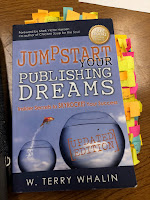
 
The second way to learn about publishing is to study how-to-write books. For years I've been reading at least one how-to-write book a month and learning from them. You can get them from your public library and read them. I've written three how-to-write books. Originally I self-published Jumptart Your Publishing Dreams but now the revised edition is available in bookstores online and brick and mortar stores. Follow this link for a free sample. This book has helped many writers learn more about publishing. Check out the illustration from a reader who marked different sections to study with post-it notes.
 
I also wrote 10 Publishing Myths to help writers have a realistic view of publishing. You can get my book for only $10 including shipping plus over $200 in bonuses if you follow this link. Or you can get it at any bookstore whether online or brick and mortar. I encourage you to get the 11th myth as a free download.
 
Finally the revised edition of Book Proposals That Sell will help you understand the book publishing world and many authors have used this book to find a publisher or a literary agent. At the book website, you can get a free book proposal checklist (the pop-up when you go to the book site).
 
Another means to get educated about publishing is to attend a writer's conference. There are some excellent events and opportunities for you to meet personally meet editors and agents. I'm headed two two of these live events next month and would love to meet with you during these events. 
 
The publishing world is full of opportunity for every writer but you must take action, learn what the editor or agent wants and expects, then make appropriate pitches. Each of us can get educated about publishing and I've given you some seasoned places to explore and improve your possibilities.
 
In this article I gave you a number of different means to get educated about publishing. Are there other ways you would suggest? Let me know in the comments below.
 

Labels: , , , , , , , , , , ,

____________________________________

Sunday, October 10, 2021


Gratitude and Subtle Changes


By Terry Whalin @terrywhalin

Last week over 30 people on my launch team did remarkable work on various book review sites like Barnes & Noble, Books A Million, Goodreads and Amazon. They wrote reviews about Book Proposals That Sell, 21 Secrets to Speed Your Success (The Revised Edition). It was an amazing experience to read reviews on Medium and other places.
 
Through the years I've written many reviews of books for print publications, Amazon and Goodreads plus promoted those books on social media. It's one of the ways that I support other authors and tell people about worthwhile books that I've discovered. I'm full of gratitude for each of these people who last week made this sort of effort for my book. With many new books releasing each day, it's not easy for any book to get reviews or attention in the market. I understand firsthand the effort it takes to write a good review about the contents in a book, then get it posted on one of these sites.
 
Years ago I wrote Book Proposals That Sell to help editors and agents get better submissions and also to help writers receive publishing contracts and better reactions. The reality of the publishing world is a huge volume of material is being submitted to editors and agents. When something is rejected, you often get a form rejection letter (if a response at all). These form rejections say something generic like “it wasn't a good fit for us” but do not give you any information about what you can do to improve your submission for the next time you send it out (if you send it out at all. Many people get rejected a few times, give up and stop submitting their work. Every book needs a proposal or business plan—even if you self-publish or write fiction or write children's books or write nonfiction books. I'm delighted to get the revised edition of this book back into the market to help a new generation of writers.
 
Subtle Changes From the Launch
 
Because of the release of Book Proposals That Sell, I also made a couple of design and image changes.  First, I changed my header on the top of my Twitter profile to emphasize the new book. Also this images tells the reader how to get a free Book Proposal Checklist. I have a pop up button for it at my book website or you can go to this site and sign up for the Book Proposal Checklist.  In the past I had a one page checklist but I've made this checklist into an 11–page free ebook.
 

My second change is something I've not done in years: I changed the image at the top of this blog on The Writing Life. I published the first entry in this blog December 31, 2004 and yes, I have been blogging each week for a long time. The original design included a book laying on the cover of a keyboard. That book was Book Proposals That Sell (the original edition). The designer built a subtle element (which I suspect no one has ever used) and I didn't call this element to anyone's attention—but I'm doing it now. If you move your mouse over the book laying on the keyboard AND click the book, it will open up a window and take you to that book location.
 
Years ago when I published Jumpstart Your Publishing Dreams, I changed the clickable book on the design to Jumpstart Your Publishing Dreams. In celebration of the revised edition of Book Proposals That Sell, I changed the book a third time (and the book is still clickable to take the reader to the book website).  Finally I changed the template header for my email subscribers. Everything matches.
 
I've written these details today to help you see the types of changes you can also make to your own website, Twitter profile and blog, when you launch a book or have any other special event. When you publish a new book, do you make these sorts of changes? Ir maybe you change something else in this process. Let me know in the comments below.
 
Tweetable:

Labels: , , , , , , , , ,

____________________________________

Sunday, June 21, 2020


Don't Forget Some Marketing Basics


By Terry Whalin @terrywhalin

Last week I told you about launching my special offer on my newest book, 10 Publishing Myths. Today I want to talk about several simple marketing basics every author can use to tell new readers about your book. As authors, we want to try new marketing efforts yet also we don't want to forget (or neglect) some basics.

If you blog (and I hope you do), your blog has a profile. Does this profile include clickable links to your latest books? A while back I wrote an explanation of clickable links. Just follow this link to get this information. I have not updated my blog profile in ages but last weekend I dug into my settings, found the location and made some changes. It's something I suggest you do as well for your latest offering to cover the marketing basics.

I've mentioned in these articles about tweeting 12–15 times a day using Hootsuite. Twitter has a feature that I've known about for several years but never used—called pinning a tweet and image. You can pin this tweet to the top of your various tweets. Until you change the pinned tweet, it remain at the top. While I've tweeted  thousands of times, I had never pinned anything—until last weekend.  As I pinned, it was a process to get it to look right. Here's this tweet.  At first, it did not so I deleted it and reworked it until I got it like I wanted it. Are you pinning a tweet?

Throughout every day, each of us send email. Do you have a signature in your email? Does this signature promote your latest book? I changed my personal email address and my work email address to add this promotion. Until I revise it, this promotion will be in my emails. Why are these signatures important? Throughout the week I write emails and adding these words point people to my 10 Publishing Myths special offer. The receiver may not notice it the first or third time we email—but they may eventually look at it. The marketing is something simple and consistent.

Finally I updated the website with my name www.terrywhalin.com  I do not drive a lot of traffic to this site but it is a common way that people will search for me and go to it. I added my special offer right at the top of this site. Admittedly I have not updated this site in a while—and it probably needs a whole new make over but that will have to wait until a later date.

I've been making sure I cover the marketing basics for my 10 Publishing Myths special offer. Have I left out something or you have a different marketing basic? Let me know in the comments below.

Tweetable:

Labels: , , , , , , , ,

____________________________________

Sunday, June 07, 2020


The Importance of Consistency


By Terry Whalin @terrywhalin

Yesterday I took about 30 minutes and filled in most of my social media plans for the next week. If you read these articles, I've posted on Twitter thousands of times—and normally tweet 12–15 times a day. I've followed this consistent pattern for years—whether I am traveling or sick or whatever. I use the tool Hootsuite. (I use the paid version of this site and it is well worth it to me.) Over the years, I've created a pattern where the bulk of my tweets come from others. In many ways my tweets are a publishing education and if you follow them and read the articles, you will learn a tremendous amount about the writing world.

Beyond using content from others, I also intersperse my own webinars, free ebooks, these blog articles and other content (including when I review a book or see a special writing related event).  It is a part of my consistent pattern. For example, every day I am promoting my biography on Billy Graham which released over six years ago. I have different radio interviews and articles and images. Some of my friends who have known me for years will react to these posts (one of the ways you know people are reading them). The consistent activity results in knowledge and awareness about my book but also book sales. It's part of the necessity of consistent activity as a writer.

What are you doing consistently? Are you…

1. Consistently learning new things. One of my consistent actions as an author is mailing books. I like to use media mail (normally $2.80) because it is dependable and inexpensive. For years, I have stood in line at my local post office with books to mail. It is not something I want to be doing now with the pandemic and social distancing. I've started using Stamps.com which has this terrific easy to use application software. You can print the label right in your home, then drop off the package at the post office. If you sign up at Stamps.com for their free trial and getting $100 value, when it is completed, behind the scenes, they will give me $20 in free postage. Here's the promo code: C-HDZ9–YNV). I encourage you to use this tool—and the promo code. You will profit and I will as well. I hope you will begin to use Stamps.com and recommend it for every author who mails books. It's much easier and time effective than standing in line at the post office.

Special Offer ($100 valuefrom W Terry
W Terry uses Stamps.com to print USPS postage online and wants you to try it too and get a special offer ($100 value).
Try it now!
Enter Promo Code:
C-HDZ9-YNV


2. Consistently reading new books. I regularly read new books and often write about them.

3. Consistently trying new tools. Several weeks ago I wrote about the best place to find used books online. This week I learned about another resource in this area: www.usedbooksearch.net

4. Consistently improving your writing. I am always working on learning better ways to tell stories and use better words in my writing.

5. Consistently working on your work in progress. Are you writing a new book? Are you making progress on this book on a regular basis? The writing only happens with consistent effort. One of the most effective ways to get moving is to set a particular word count you want to hit every day. For example 200 words or a single page. If you write this page consistently, it will grow until you complete your book.

6. Consistently writing these articles for my blog. If you look, I've posted something every week on this blog for a long time. It does not happen without consistent effort.
Through the consistent activity, you are able to produce a large body of work.  Is it simple or easy? No but it is important. Each of us have the same 24 hours of time. Like the sand an hourglass, time will slip away if you don't use it consistently and effectively. I hope I've given you some new ideas and resources in this article.

Are you aware of the importance of consistency? How does it play out in your writing life? Let me know in the comments below.

Tweetable:

How is consistency important for writers? Get resources here from a prolific editor and author. (ClickToTweet)


Labels: , , , , , , , ,

____________________________________

Sunday, March 22, 2020


Some Keys for Being Active on Social Media


By Terry Whalin @terrywhalin

For years, I have worked at developing a large social media following—over 200,000 Twitter followers, over 18,000 LinkedIn Connections and over 4,900 Facebook friends. These types of numbers do not happen overnight but are something every author can do—with consistent work. I continue to expand and develop these areas.

In this article, I want to give you several keys for doing your own social media. Yes you can hire others to do social media. 

From my experience no matter how much you train them, they will not do it like you do it. Your passion needs to show through. I have always done my own social media posts.

1. Control Your Social Media Time. It's easy to waste hours on your Facebook feed or Twitter feed or LinkedIn feed. I do go over to these places but my time is controlled and not very long at any time.

2. Have the Mindset Your Social Stream Is Like a Magazine. If you follow me on Twitter or Facebook or LinkedIn, you notice I have a great deal of variety on my social media streams. Yet everything is focused for people interested in publishing. My mindset when I put together my posts are like I am putting together a print magazine targeted to a particular audience. I will keep you on track with what you are putting out.

3. Work Ahead. I use the paid version of Hootsuite to post consistently throughout each day. The majority of my posts come from other people and each one has an image and a link to more resources, The only exception is the quotation and photo I use to begin each day. In general, once a week I fill out my plans for the entire week and it often takes me about 20 to 30 minutes for this task.

4. Create A Grid for Your Scheduled Posts. No one but me probably knows the pattern of my social media posts. I begin each day with a quotation and a photo of that person. I follow that with a couple of posts to my own material such as a free ebook or a product that I'm selling. These posts are followed by six hours of posts from others—yet to my target audience. I close the day with a couple of personal posts to a blog article or a free resource. You could create a formal grid (I haven't) but I recommend you make a pattern for yourself and then it is automatic and something you do rather than work to create.

A recent Pew Poll has proven that 80% of the tweets on Twitter come from 20% of the people. Because I tweet 12 to 15 times a day, I believe I'm in the 20%.  Here's an extra truth about social media: Not everyone reads every post but people are reading your posts. I can see from the comments and reactions.

These are some of my keys for being active on social media. What are your keys in this area? Let me know in the comments below.

Tweetable:

Labels: , , , , , , , ,

____________________________________

Saturday, February 15, 2020


Get Inspiration from Quotations


By Terry Whalin @terrywhalin

Early on in my journalism training, I was taught to look for key quotations. Often these statements would be in the lead of my story or they would drive home the point of my story.  

As writers interviewing other people for the content of a chapter of a book or a magazine article, I encourage you to be looking for these key quotations. They will help you as you craft your stories.

When I read inspirational quotes, I get insights and encouragement. I look for them from many different sources like my own reading of books or blogs or articles online. When I find them, I will often cut and paste them into my social media plans for the future. It's been my pattern for years with my social media feeds for the day: I begin every day with an inspirational quotation and an image.

In the social media world, you can attract more attention, retweets and responses if you include an image. Through the years of my using social media, I have collected images of different people into a file labeled “Twitter Images.” These images are stored alphabetically so when I need one again, it is easy to locate and use again.

Here's an example I saw today:


“Remember that the happiest people are not those getting more, but those giving more.”
-- H. Jackson Brown, Jr. 


I add the image and then save it into my HootSuite. It will begin my day of social media postings on Sunday, May 3, 2020 at 6:05 am. Yes on inspirational quotations, I am way ahead on my postings. I use Hootsuite (the paid version with unlimited posts to schedule—and I take full advantage of this feature and schedule my posts way ahead of time—at least some of them).

I have another reason I'm way ahead on my inspirational quotes. Several weeks ago, I was behind on gathering these inspirational quotations. I learned to use another feature of HootSuite which I had not before. This program stores all my old tweets which number in the thousands. I went back and took the inspirational quotes for a month (at least one year ago so no one would remember) and worked them into my future schedule. I created a pattern of beginning every day with this inspirational quotation. Do you have a pattern or grid for your tweets? I do and it makes it simple to schedule with this grid for certain types of tweets in mind.

Do you get inspiration from quotes? Do you use them and see them on a regular basis in your writing life? Let me know the details in the comments below.

Tweetable:

Inspirational quotes are often seen in articles and online. What do you do with them? Get some ideas from this prolific editor and author. (ClickToTweet)


Labels: , , , , , , , , ,

____________________________________

Sunday, August 18, 2019


Four Reasons to Send Me Your New Book


By Terry Whalin @terrywhalin

Every day new books pour into the market and millions of other titles are already in print and on the market. As an acquisitions editor at Morgan James, a New York publisher with about 150 new titles a year, I'm actively involved in bringing new books into the market. I'm a contributor to the volume of new books entering the marketplace.

Over the years, I've received many books from publishers and authors. At a Book Expo in Los Angeles, I picked up an advance reading copy (ARC) of a book from Doubleday called Covenant House. I had this book months before it released to the public. I read the book and wrote a short query letter to a magazine. This publication gave me a word count and a deadline for my review (which I met). It was my first published book review.  I was a book review columnist for two print publications (both no longer exist). Each issue I selected the books which were reviewed in these columns. Some publishers sent me most of the titles they published with the hope I would select one of their books to include in the magazine. It amounted to hundreds of books in many different genres and types. I gave away so many of these books to a church library in Kentucky, the mayor of the town declared an official Terry Whalin Day.

In this article, I want to give you four reasons to send me your book (even if it has been out a while):

1. I read constantly in many different genres—mostly nonfiction but some fiction.

2. I write reviews about books (currently over 900 on Amazon and over 500 on Goodreads). In general if I read a book (or listen to it in audiobook format), then I write a review of the book. From my experience it is often a challenge for writers to find people who will not only read their book but write a review of the book.

3. I tell others about these books when I teach at conferences. When I teach at these events, I talk about authors and the different books that I've read.

4. I tell others about my reviews of books through my social media connections (over 200,000 on Twitter, over 15,500 on LinkedIn and over 4900 on Facebook).

How to Pitch Me on Reading Your Book

1. Understand I only read print books. I do not read Ebook versions through net galley or any other format.

2. I don't read every type of book and I'm selective. For example, one author has been pitching me several times to read and review his book. I looked at his Amazon page and it is over 500 pages and not on a topic that I'm interested in (much less the large size). I politely declined that book

3. Email your pitch on your book and why I should read it. Your pitch should be interesting yet short and to the point with the page count, the release date and the publisher.  I will read it and email you back whether I want to read it or not. If I want to read it, I will send you a mailing address for the book.

Every author can use this simple pitching process for their own books. The best way to get reviews for your book is to ask others. If you are not proactive on gathering and getting reviews, normally it does not happen—especially for nonfiction books. Sometimes fiction writers have an easier time getting reviews (depending on the genre and publisher of your book).

Do you read books and write reviews? Let me know in the comments below.

Tweetable:


Learn Four Reasons to Pitch Your Book to this Prolific Writer and Editor. (ClickToTweet)

Labels: , , , , , , , , , , ,

____________________________________

Sunday, June 02, 2019


Control Your Social Media


By Terry Whalin @terrywhalin

In recent years, I've gained a large social media following with over 200,000 on Twitter, over 4,900 Facebook friends and over 12,000 connections on LinkedIn. In other articles, I've provided details about what I am doing and how I am doing it. Today I want to talk about a different aspect of social media: control.

All of these social posts are something I personally do. I don't have an assistant or someone else doing it. I realize several things:

--consistency is important

--people are reading this information and at times responding to it

--the information will be online FOREVER (yes I understand that all CAPS is shouting but I want to make sure you see these posts are around for a very long time)

The words matter. I begin each day with an inspirational quotation and an image of this person. Today on one of these social networks, someone added a comment about the person I quoted and flamed this person because of other actions they have taken. The comment was inappropriate and very public—and I've watched these types of things escalate on social media to move in a strange direction. I immediately deleted the comment. Then I took further action: I blocked this person from this network so they can never again make such a comment on my posts. I'm in control of my own social media so I took immediate action. Yes I believe in free speech but I also understand that I can control my own social media.

When you read something you don't agree with, you can post a comment or you can move on in silence or you can write the person directly (not public). Each of us have choices in this area. The person who puts out the social media post has a choice and the person who responds (or doesn't) also has a choice.

Several points in this area:

1. Take control of your social media

2. Monitor the comments so you can respond and engage with it. Engagement is a huge reason for being active in social media and the more your audience is engaging, the better in my view.

3. Use tools like Hootsuite and others to help you easily monitor the responses to your social posts. For example, people try to send me direct messages often on Twitter and I don't read those on Twitter because of the time involved (mine is limited for social media because of other things I do throughout the day—a choice). Instead I read these messages and at times respond through Hootsuite. Find your own way to handle this aspect of social media.

4. Always look for ways to expand your readership and grow your social networks. I'm not talking about doing it artificially where you buy Twitter followers but organically where you connect with more and more people. As you increase your reach, you will increase your interest from editors and literary agents and others in the publishing community.

OK, that's my view on the necessity for us to take control of our social media. Do you agree or not? Let me know in the comments below.

 Tweetable:


Are you in control of your social media? Get insights here from a prolific editor and author. (ClickToTweet)

Labels: , , , , , , , , ,

____________________________________

Sunday, April 21, 2019


How to Press Forward When Stopped

As a writer, how to you move when stuck?

As writers, I've learned we are frequently told the word “no.”

Your idea isn't a good fit for us.” (A polite rejection)

Not publishing this type of book.”

There are many other ways we are told no or stopped in our tracks. For example, I've mentioned in these entries about using the tool called Refollow every day to grow my social media presence. 

Refollow helps you follow up to 800 people in your target market—and you can also unfollow about 1,000 people a day. You can get month's FREE trial and see if you like using this program (use this link). Consistent use of Refollow is one of the reasons I have a large Twitter following.

I want to use this program as an example of how we as writers need to not get stalled with “no” and instead keep pressing forward. Today I used the program and followed 800 new people. Normally I open a window in my browser and Refollow works along as I do other things. To make sure the program is working, I check on it from time to time. Refollow works with Twitter and sometimes the program will stop and flash a message saying the program stopped not because of the program but because of Twitter's limiting the number of people you follow.

When this happens, I suspect some people close the program and stop using it—and return tomorrow. I do not take this path. Instead Refollow allows you to unfollow people who have not followed you back. In some cases, I've been following these people for years and they have not followed me back. I use the program to unfollow people. Even using the unfollow portion of the program, I am stopped. I get a message saying my connection between the program and Twitter has expired and I have to restart. Some people at this message, would probably quit the program. Instead I try it again—and often it keeps working. The program and the process isn't perfect or straightforward because it works with Twitter. You have to determine your next move when stopped—continue or use a different aspect or decide to return later (even tomorrow).

This process is often the same in other parts of the writing world. You pitch a magazine and get a rejection. (Follow this link for a resource to help you.) Or you approach a literary agent and they don't respond or they say their client list is full for your type of writing. Or any number of other polite ways people say “no.” When you get this response, does it discourage you and you take it personally or do you press forward with something else (like a different type of writing)?

I encourage you to figure out your game plan before you get stopped or hear no. Then keep moving forward with the next plan on your list. Otherwise, you go into stall and don't accomplish what you wanted. The choice is up to you. I choose to look at the world as full of opportunity and you are searching for the right opportunity. 

As writers we have many different directions for our writing. I've written books, magazine articles, websites, Ebooks, radio scripts, and other types of writing for many different audiences (preschoolers, young readers, teens and adults). If you need some ideas, I encourage you to download and read the first chapter of Jumpstart Your Publishing Dreams (no optin and use this link).

How do you press forward when you are stopped? What are your strategies? Let me know in the comments below.

Tweetable:


When you are stopped, how do you press forward? Get ideas from this prolific writer and editor here. (ClickToTweet)

Labels: , , , , , , , , , , , , ,

____________________________________

Sunday, March 17, 2019


Try My Secret Twitter Tool for FREE

What goals and dreams do you have for the months ahead? Reach more readers? Sell more books? Get them to your online course? Speak to more people? These goals or others are terrific but you must have the connection to people.

Since 2008, I’ve been on Twitter along with millions of other people. If you follow me, you will see that I tweet often throughout the day—which is one element of my success. To use Twitter effectively, you can't tweet once a day or once a week (like I see many writers doing). Consistently providing great content to your target audience is an important part of this process.

A second key is in this process of growing your presence on Twitter is using a secret tool every day. I've been using this tool consistently for years. The tool is called Refollow. In a few minutes, you can follow 800 new people in your target market. A certain percentage of these people will follow you back and your numbers will climb. My daily use of this tool is one of the key reasons I have over 200,000 followers on Twitter. You can follow the link in the previous sentence to see the number of my followers.

Please note my 200K followers are not bought or fake. These are real people who engage with me and my content. It’s what I want for you as well—to grow a large responsive audience.
Refollow is not complicated or expensive. I’ve arranged for you to get a FREE trial. Just use this link.


I use this $20 per month tool to follow 800 specific people every day in my target market, It is not random but I’m following people who are interested in my content or tweets. Your target will be different from mine but you can use the same tool to grow your Twitter following—and in only minutes a  day.

What if I follow them but they don’t follow me back?
Refollow also covers this aspect with another feature. The program will locate people who you have been following but have never followed you back. In my case, some of them I’ve been following for years and they haven’t followed me back. In minutes, I can unfollow up to 1,000 people a day. All of these details are within the rules of Twitter and accomplished through Refollow.

Discover the details and get your FREE trial at this link.

I want you to succeed and achieve your dreams. Refollow can be a key part of your success--provided you take action and use it consistently.

In the comments below, let me know how you are growing your following on Twitter. Maybe you have a different tool you are using and I'd love to learn about it. 

Tweetable:

Use this “Secret” Tool to Increase Your Following on Twitter. Get a FREE Trial. (ClickToTweet)


Labels: , , , , , , , ,

____________________________________

Sunday, October 21, 2018


Distribute Selected Targeted Content


One of the blogs I read consistently is from the Steve Laube Agency. I've known the various writers for years and they write solid valuable content. If you haven't subscribed to their email version of their articles, I recommend it. Recently literary agent Dan Balow wrote about Eternal Words. It's a concept that I keep in mind with every social media post and blog article—my words are around online forever. If you feel a rant coming on or want to post something strange—think twice before you send it out to the world.
I've written over 1400 articles for The Writing Life and I've posted thousands of tweets and other social media posts. With each one I've thought about the eternal nature of our words. A few weeks ago I wrote about developing writing routines.

One of my routines is to use Hootsuite to schedule my social media posts. I post numerous times throughout a day (12–15 times) yet each post is crafted and includes an image along with often a link to additional insights. As I write each one I'm asking:

1) Is this information right for my target audience?

2) Is the article that I'm highlighting timeless? For example, this time of year, a number of articles are about Halloween but I'm scheduling the posts in the future. It is not appropriate to post an article about Halloween in December.

If you study my tweets, it doesn't take much to see they are in patterns. I begin each day with an inspirational quotation. Then I follow with a couple of posts which include my writing (either on my blog or a free ebook or teleseminar). The bulk of my posts are targeted content for people interested in publishing or writing with links to additional articles and insights. Finally I end my social media posts with another article or free ebook or teleseminar or product. The next day, I begin the process again.

My encouragement is that you create your own pattern for your posts. This routine will help you be consistent and yet not have to invent something new each time. I am constantly reading blogs and articles about publishing and writing. When I find something that fits my audience, I will often schedule it right away. My social media feed can be a remarkable education for the reader about the world of publishing. Your audience and your material will be different. My intention with this article is to give you some ideas and help your planning and social media posts.

How are you distributing targeted content for your audience? Let me know in the comments below.

Tweetable:

Are you posting targeted content for your readers? Get some ideas here. (ClickToTweet)

 AddThis Social Bookmark Button

Labels: , , , , , , ,