____________________________________

Sunday, May 18, 2025


The Price Tag of Innovation

By Terry Whalin @terrywhalin

In these entries on The Writing Life, I talk about different aspects of the world of publishing. In about a week, I begin to teach a continuing class at the Blue Ridge Mountains Christian Writers Conference in Asheville, North Carolina. This event is one of the largest in the country with over 600 people last year. Its been my honor to teach at this event a number of times. Like other aspects of publishing that Ive mentioned, to be considered on their faculty, I have to pitch what I will teach. To give myself the best opportunity to be selected, I intentionally pitch something different than Ive taught in the past. 

Months ago I pitched teaching a continuing session (Making Books Is Easy but Selling Books Is Hard. Unlock the Mystery: How Do Authors Sell Books?). I created a brief paragraph about each session. My personal challenge is that when I teach, I pour a great deal of time and effort into my handouts and the information which I will be giving to my class. 

Because of the size of this conference and the other classes, I never know ahead of time how many people will be at my session. Some years I have taught a full class with someone in every seat. Other years I have had two or three people (yes that number is correct). Other times I have had a dozen people in my class. I always prepare as though I will have an overflow crowd--whether that happens or not.

My challenge is finding the time to prepare for these new sessions. My handouts for the sessions are due ahead of time. Instead of printing a bunch of handouts which are not used, all of the handout information will be stored in a password protected area (just for people who have paid for the conference) to access and use. Unlike some of the other instructors, I do not use a powerpoint or an online slide deck. Through my years of attending these conferences, I  been in the audience where the instructor spends the bulk of the hour trying to get their computer to work or some other glitch prevents the audience from receiving the information. Instead when I teach, I focus on producing handouts with a lot of information (way more data than I can teach during the time period) and put it online for the participants to use when they return back to their homes.

On top of this continuing class responsibility, Ive been invited to give one of the keynote talks to the entire conference. Its another opportunity that I do not take lightly. I've worked and reworked my stories and what I will be saying during this time. Ive prepared a special business sized card which Im carrying to the event and plan to give to each person at the end of my talk. They can put this card on their computer or bathroom mirror or some other place where they will be reminded of my different key points. 

I learn a great deal as I prepare to teach and it helps me crystalize some of the actions that I take on a regular basis for my own books. Also Im intentionally telling stories of my various experiences in publishing combined with some how-to steps for every listener. I cant make any listener take action for their own writing life. All I can do is give them the various resources and point to where they can go on their own journey.

What do you want to accomplish? Write a specific goal and give yourself a deadline for that goal. What will it take for you to complete it? How can you break the tasks into short bursts that you can mark off and move forward? It will be your persistence and consistency that will eventually get it done. 

As authors, each of us are on this journey to find our readers, sell our books and help others. I called this article, The Price Tag of Innovation. There is definitely a cost and investment for every speaker or teacher at these events. It costs time and energy away from my office and other responsibilities. It costs time and energy away from my family. Yet from my experience of attending writers conferences for many years, I know the teaching to the right person can be life-changing. From my experience, the price tag of innovation is worth it.

What price tag are you paying for innovation? Maybe its an investment in a writers conference or taking an online course or maybe you are getting up an hour earlier each day to crank out some pages on your current manuscript. It could be dozens of things that need to be accomplished to reach more readers with your words. Let me know in the comments below.

My Writing In Other Places:

With these articles, I encourage you to publish your work beyond your blog in other places. Below are a couple of locations where my work has been recently published.


Each month I write an article about book proposal creation for Almost an Author. This site recently was hacked and went down but is now back up. I encourage writers to Build and Maintain Editor Relationships at: https://bit.ly/4jRmRKK 


Each month I guest blog for the Blue Ridge Mountains Christian Writers Conference blog. In this article, I encourage authors saying: You Can Reach Your Writing Goals at: https://bit.ly/4j3uUTC

Tweetable:


During my decades in publishing, I’ve heard the unrealistic expectations of writers. The reality is many aspects of the publishing process are outside of anything an author can control. I wrote 10 PUBLISHING MYTHS to give authors practical help. You can get decades of insights in 10 PUBLISHING MYTHS for only $10, free shipping and over $200 of bonuses. 

Get these articles on your email

Since 2004, I have blogged about The Writing Life over 1,700 entries and one of the top 27 content writers. With this simple form, each week you can get my new articles, encouragement and insights at: https://t.co/W6uU64u6aA

Labels: , , , , , , , ,

____________________________________

Sunday, March 09, 2025


Key Actions For Your Writing Life


By Terry Whalin @terrywhalin

Writing is a solitary action that we do alone. Yet we need other people. I compare our lives as writers to actors who are on a set for a movie. They prepare their lines from the script, get in position, then action. In this article I want to give some basic but key actions each of us need to do for our writing lives.

Get to a Conference

Scattered throughout the US are writers conferences. Some are one day. Some are two days and some are longer. Select one that is the right one for you with the right faculty and the right classes for you and your writing. It will take some work to make each of these decisions. Some people return to the same event year after year for relationships and interaction. The choices are many, but you must make a choice, register and get to the event.

Prepare for the Event

Create business cards and bring them to the event. Even if it is your first conference bring a basic business card with your name, email and maybe even your picture on it. Bring lots of them. Often people run out of business cards, and I always make sure I bring plenty.

When you give a business card, get a business card. It’s an exchange and you may need the information from that other person. If they don’t have a card, then use paper and write it down so you get it. This conversation may be your only time to speak with this person so seize the moment and get the information. You never know when it might be useful, and you will need it. 

Prepare your pitch before the event

Who do you want to meet during the appointments During the meals? Plan a strategy and you will be ahead of the others in the room from your planning. Bring copies of your one sheet, your pitch so you can freely give it out to anyone who wants it. 

Most of us are introverts but don’t be shy during the event. Ask questions. Introduce yourself to others. Meet as many people during the event as you can. In line for a meal or sitting at a table or any number of other times. Seize the opportunity because it might be your only chance to meet someone who will be significant in your life and writing career.

Attend the sessions and take notes. Look for opportunities and actions that you need to take. Write it down then circle back to it after the event and act on these ideas.

If you don’t try, it will not happen. Thinking about it is not enough. You must sit in your chair, put your fingers on the keyboard and crank out words. 

Even if you have just a few minutes, do it and write something and it will pay off.

I’m writing these words on my Alphasmart 3000 in a hotel in Greenville, South Carolina. I fly home tomorrow when my blog will post, and I want to make sure I get it done. Each of us has limited time but you must use the time wisely.

Many people are attending their first conference and need encouragement of action-oriented ideas. This weekend I met a local writer who showed me her notes from a class that I taught at the Blue Ridge Mountains Christian Writer’s Conference in 2005. I taught a class that I called Faithful in the Small Things. She showed me her notes which she had written in details from my talking and how the information I gave was timeless and still relevant for her today. It is always goal whenever I teach to give timeless information which will serve that participant for years in the future. It was affirming for me to hear the results of my teaching from 20 years ago.

When you go to a conference, I encourage you to meet everyone that you can, exchange business cards with them and ask questions. The bulk of us are introverts (like many writers) but you must step outside of that personality and ask questions, respond and follow-up. 

Our world is filled with many opportunities, but you must create them through your consistent pitching and perseverance to find the right place to get your words published.

If you are consistent and persevere, your actions will pay off in your writing life.

What am I missing? Let me know in the comments below. 

New Podcasts:

In these articles, Ive encouraged you to use PodMatch or some similar tool to book and record podcasts. Last week several of my podcast recordings were launched.


Lou, Teresa and I spoke about publishing myths on the Earrings Off Podcast. Listen to our conversation at: https://bit.ly/4iFaP6z

Paul Banas and I spoke about Mastering Book Publishing on the Great Dad Talks Podcast. Listen to our conversation at: https://bit.ly/4kqRfwd


Jim Tracy and I spoke about busting myths in publishing on The Grampion Podcast. Listen to our conversation at: https://bit.ly/3F4BDys

Tweetable:


Get these articles on your email

Since 2004, I have blogged about The Writing Life over 1,700 entries and one of the top 27 content writers. With this simple form, each week you can get my new articles, encouragement and insights at: https://t.co/W6uU64u6aA

Labels: , , , , ,

____________________________________

Sunday, February 23, 2025


Why I'm Podcasting (and You Can Too)


By Terry Whalin @terrywhalin

During a recent visit from my youngest son and his wife, we were talking about podcasts. They listen to these broadcasts all the time and they admitted even listening while at work. Both of them are in the tech industry with intense positions and listening to podcasts is a part of their routine.  

There are an estimated 3.5 million podcasts. As you can imagine, many different types and possibilities. Early on I decided to guest on other people's podcast instead of starting my own podcast. The path of guesting on the podcasts of others looked easier for me than figuring out how to host and produce my own podcast. 

Through the years, Ive been a guest on podcasts and I used a simple tripod and my iPhone to connect to these events. Then over two months ago, I joined PodMatch, set up my profile and began to pitch then book various podcasts. Im continuing to pitch new podcasts and book new recordings. While Ive been with PodMatch, Ive booked or recorded over 30 podcasts. According to the behind-the-scenes information on PodMatch, Ive had 3,700 downloades and 1.5M on social media. 

As I look back at my own journey into podcasting, I recalled that a year ago I didnt even have a webcam on my desktop computer. I purchased a webcam and set it up on a tripod and began using it for my podcast recordings. 

This webcam has a built in microphone. One of the podcast hosts used earphones and listened to the quality of my webcam microphone. He encouraged me to use an external microphone. Several years ago I purchased this external microphone but I had not hooked it up so I could use it each time. I learned to use this external microphone as another step in my podcasting journey. 

Some podcasts will only use the audio recording while others use the video and the audio recording. When the video is used, there are other elements to consider. For example, is your lighting right? What is the background and is it distracting to the viewer? For example, I have a closet door right behind my desk next to my bookcase. This door looks better on camera if the door is closed. Also I make sure the other visuals look tidy and organized whenever I am on camera.

For the lighting issue, I purchased a light which I use each time to help my appearance and I also make a point of turning off any distracting light in my background. Finally I purchased some inexpensive headphones and wear them each time which cuts down on any distractions and extra noise. 

Im writing about these details because to the viewer, these details matter. You want the viewer to be focused on the conversation you are having with the podcast host and not distracted by some annoying detail in your background.

Connecting with the Right Podcast

How you set up your PodMatch profile is important because you tell about who you are and give some sample questions for the podcast host. Ive created a list of sample questions related to my book and specifically what I want to talk about and promote during the podcast. I wrote about how Ive set up my PodMatch profile in this article. I encourage you to follow the link and use the information for your own profile and gameplan.

Create Your Stories and Talking Points

As you are on a podcast or a radio broadcast or have someone interviewing you for a print article, have you thought through the stories you will tell and your talking points? It's an important part of your preparation to be interviewed. Within publishing, we call this media training. For example, if you are going to be on Good Morning America or The Today Show, your segment will only be a few minutes. If you are taking media training, an expert can run through your talking points and that process can take all day to prepare for those few minutes of interview.

During the conversation with the host, if you have your talking points in mind, you can steer the conversation and tell the stories that you planned to tell during the interview. The podcast host is guiding the conversation and keeping an eye on the clock. They will ask you a final question or two then end the broadcast. When it is over, you want to make sure you have included the main points that you wanted to include in the conversation.

Prepare Before the Podcast

Who is interviewing you? What is their focus? How can you take your talking points and make it relevant to this particular podcast? This preparation only takes a few minutes but will help you connect with that podcast host.

Why Do This Preparation?

At the end of the interview, you want the podcast host to love the conversation you had on the broadcast. You want the listeners to take action (for example buy your book) but you also want to have more opportunities in the future for additional podcasts. Part of being a professional is taking the time to prepare and then execute with excellence.

In this article, Ive included a lot of detail about what Ive learned through my podcasting. I have more to learn in this area. For you to successfully use podcasting or any other aspect of the publishing business, it takes thoughtful work, planning and execution. The details matter and how you use and apply those details will affect your results. How can you apply this information to your book and your podcasting or interviews? What am I missing from this article? Let me know in the comments below.

Some of My Writing In Other Places:
I continue recording new podcasts but in recent weeks, Ive had a couple of guest blog post articles.
The Almost an Author website got hacked and was down for a month or so but is now back. Heres my article about maintain a submission record and follow up: https://bit.ly/3Qn0b82 
For Writers on the Move. I wrote about How to Hire the “Right” Publicist at: https://bit.ly/3EDUdx8  This process is not simple and you must ask the right questions in this process and I explained some of this process in this article.
Finally I published another article published on the Blue Ridge Mountains Christian Writers Conference blog about the Hidden Costs of Publishing at:  https://bit.ly/4hSyjVO

Tweetable:

Let’s be honest. Publishing is a complex business and much of the process is outside of anything an author can control—no matter how they publish. I I wrote 10 PUBLISHING MYTHS to give authors realistic expectations  and practical help. You can get decades of insights in 10 PUBLISHING MYTHS for only $10, free shipping and over $200 of bonuses. 

Get these articles on your email

Since 2004, I have blogged about The Writing Life over 1,700 entries and one of the top 27 content writers. With this simple form, each week you can get my new articles, encouragement and insights at: https://t.co/W6uU64u6aA

Labels: , , , , , , , , ,

____________________________________

Sunday, May 02, 2021


Anticipate Your Future Actions


By Terry Whalin @terrywhalin

Several months ago, I wrote an article about The Practice of Anticipation.  This article contains different information than the first article and I hope this will help you in your writing life. This process is about taking action today to anticipate the future. It is almost like this photo of a mom helping her child prepare a treat—anticipating your future needs.
 
As you write and work in the publishing community, do you regularly save data, photos and even social media posts, then you will be able to use them in the future? It's something I've been doing for years and call it the practice of anticipation.  When I come across some data, I use it for my current purpose, but I take a couple of extra seconds to save the data in a place and format, I can access it and use it in the future.
 
For example, I've been tracking down some old illustrations in one of my out of print books. I'm in the process of bringing this book back to print (more on that soon). I've purchased the rights to the old book but did not get some of the illustrations in a high resolution format. Through a series of phone calls and emails I met the printer for my old book—and I added the name, address, email and phone for this printer to my address book. I have no idea if I will need this information in the future or not, but I'm preserving it in  an accessible format—just in case.  I take these sorts of actions with emails, phone numbers, addresses, and other bits of information.
 
When I write an article for The Writing Life, at the bottom of the article, I use ClickToTweet to create an easy way for others to share the content. Then I take one more step, I save my ClickToTweet in a text file with tweets. Then I can easily cut and paste this post and use it another time.
 
I also anticipate using images again. Each day I begin my social media posts with an inspirational quote and a photograph. Social media posts gain a lot more exposure if they are more than text but also include a photo. I save these photos in a file on my desktop. When I travel, I copy this file so I can access it on the road. This file also includes the various royalty-free photos I use for my different articles. I can easily access these photos to use in another social media post—because I am anticipating using them again. For my writing life, it is all about being organized enough to save critical information in a format you can easily access it again if needed.
 
Several weeks ago I recorded a podcast with James Schramko in Australia—his episode number 820. I had no idea when this podcast would air but got the notice it had launched (follow the link if you want to watch or hear it.) I have promoted the podcast but also saved the various images and a social media post to use it again in the future. It's all about practicing anticipation.
 
I also anticipate my office supplies. For example, last week I used my last ream of paper for my printer. I ordered another ream of paper. I also used my last black ink cartridge in my printer and ordered more ink. Anticipation is important so when paper or ink need to be replaced, I have already anticipated it and have what I need rather than running to the store or quickly ordering it.
 
Another way to describe this practice of anticipation is taking steps today to prepare for future actions. What actions are you taking today that will help you in the future? Let me know in the comments below.
 
Tweetable:

Labels: , , , , ,

____________________________________

Sunday, June 16, 2019


Interview Others to Grow as a Writer


By Terry Whalin @terrywhalin

For many years, I interviewed authors about their books and the craft of writing for magazine articles. Sitting with these bestselling authors and asking them about writing taught me much more than I could pour into a 1500 word or even a 1,000 word magazine article.  Interviewing others is a critical skill for any writer.

If you don't interview others for your magazine articles, I recommend you write some query letters and pitch writing personality profiles. These profiles are magazine articles focused on a single person and many publications love these types of stories. After you get the assignment from an editor, you can secure your interview with the person. If they are well-known and you don't know how to reach them, go to someone in the publicity section of their book publisher. These publicity people book interviews for journalists to reach their authors.

These publicity people will track down the author, nail down a time for your interview. I always ask for 45 minutes to an hour for the interview to make sure I get what I need for my profile. Also these publicity people will send you review copies of any books and background that you need. Gather all of this information from the publisher ahead of time. Then read the books and look for unique insights and questions you can ask the personality.

If the person you are interviewing is well-known or has been interviewed often, your preparation and creating unique questions is a critical part of your preparation.  If you don't prepare, you will not gather unique stories and information from your interview. Instead the person will tell you their “stock stories” or material that they always tell journalists during their interviews.  For your article, you are looking for stories which have not been told or are rarely told.

As a part of your preparation, write down a list of specific questions. Take time to imagine yourself doing the interview and how you are going to ask different questions. As you specifically write them down, it will help your preparation for the interview. Then during the interview, use your questions but also be flexible to ask other questions as they happen. At the end of the interview, ask if there is something else you should have asked. It gives the individual a chance to sell you something they wanted to tell you.

Whether the interview is on the phone or in person, I tell the other person that I'm making a recording of our conversation and get their permission on the tape. As a practice, in general, I do not transcribe this tape (which from experience seems like a waste of time and energy). Instead I write from my notes but use the tape as a back up tool—and for expansion of information. I can't write fast enough to get down everything (at least in a format so I can read it after the interview). I have found this method of recording and using the tape for additional information as the most effective way for me to use the recording.

Also as a part of the interview, I ask the person how I can check the facts of my story with them before I send it to my editor. The editor may edit and change around the story—but I can protect the accuracy and integrity of what I'm sending. Most journalists never take this step in the interview process. Then if you publish something inaccurate, it will potentially ruin your relationship with the individual. If on the other hand, you check the details with the person, then you are taking steps to preserve your relationship with the person—and can easily return to them for something else in the future (even the distant future).

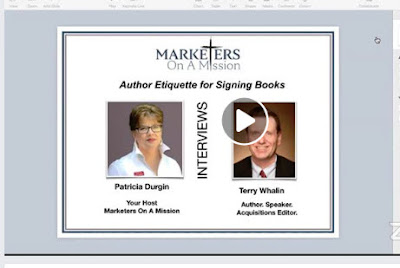
Last week instead of interviewing another person, Patricia Durgin interviewed me on Facebook Live. I loved Patricia's preparation and questions for this hour-long interview. You can follow this link to watch the interview.

Do you interview others? Has it helped you grow as a writer? Let me know your experiences and tips in the comments below.

Tweetable:


Discover interviewing others is a way to grow as a writer. Get insights from this prolific journalist and author. (ClickToTweet)


Labels: , , , , , , , , , , , ,

____________________________________

Sunday, May 20, 2018


Four Ways to Prepare for a Conference


For many years, I've been attending and teaching at conferences. Many of the articles that I've published and the books that I've written have their beginnings with someone I met at an event. If you have never been to a writers conference, I encourage you to make plans and attend one this year.  It will boost your writing life to a new level and help you on a number of different fronts. A number of the people at each conference have never been to a writers event and it is their first time. If you are holding off going to a conference because you've never been, do it. It will change your life and propel your writing forward.

Editors and agents work with people that they know, like and trust. Yes we get tons of pitches and proposals on email and online and in the mail. But if you have met an editor or agent at an event, maybe even eaten a meal together or sat in one of their classes, the relationship goes to a new level of depth. Many of those relationships begin at conferences.

As an editor, I've been preparing for several events, updating my handouts, critiquing a few manuscripts for people I will meet and gathering my business cards and other materials for the events. I always bring plenty of business cards to handout.  Numerous times at conferences I've asked an editor or an agent for a business card. This person forgot their cards and had two or three and they've already handed them out. I do not want to be one of those types of editors so I make a point to bring enough.

For the person attending the conference, I want to give you several ways to prepare for the conference:

1. Study the conference program ahead of time. Make some initial choices about the classes you will attend. Also notice who is coming from different publications and publishers. Be aware of their names and positions so when you run into them in line or in the dining room, you can begin a conversation with them.

2. Prepare pitches for particular editors and agents. You will see some of the faculty are more relevant to your writing than others. Create a small list of people you want to set appointments or sit at their table during a meal. Because of the weight, editors and agents are some times reluctant to take a full manuscript but they will often take a “one sheet” (where you summarize your idea on a single piece of paper with your contact information—including email and phone). I always like to see as much as someone wants to show me. I will often take full proposals or manuscripts home with me (if available). Or some authors bring their material on a flash drive to give to editors and agents.

3. Create and bring business cards. Even if you have never been to a conference, create a business card with your name, email and phone number. Also I like to include a mailing address so I can see the time zone where you live. Also if you have a current photo, include it on the card. Bring plenty of cards and hand them out generously throughout the event. In my view, it is always best to trade cards. You give the editor one of your cards and you get one of their cards.

4. Bring an attitude of learning and listening and taking action. Throughout the conference, you will learn new things, write them down in a little notebook. Ideas and requests should go on a separate page that you can cross off as you handle them when you return home. As a writer, you have invested a lot of time and money to attend these events. One of the best ways to get your value from the event is to follow-up and send the requested materials. If you take these actions, you will make a positive impression on the agents and editors that you meet at conferences.

Some people wonder how my writing has been published in more than 50 magazines and I've written more than 60 books. There are many reasons but one of the main ones is my follow-through. If someone asks me for an article or a proposal, I send it to them after I return home. You'd be surprised at the lack of follow through from others at the event.

Are there other keys to prepare for a conference? Tell me in the comments below.  

Tweetable:

What are four ways you can prepare for your next conference? Get specifics here.  (ClickToTweet)
 AddThis Social Bookmark Button

SocialTwist Tell-a-Friend

Labels: , , , , , , , , , ,

____________________________________

Sunday, January 06, 2013


Four Keys to Your Conference Experience

Next month, I’m traveling to the Florida Christian Writers Conference and I look forward to it. I’ve been revising and updating my workshop on book proposal creation, Editors Read Proposals Not Manuscripts. I’ve been sorting through my 20+ years in publishing and preparing which stories to tell during my class.

I love writers’ conferences. In fact, I'm going to teach at a number of conferences this year (follow the link to see the places).

Each conference is a grand idea haven to talk shop and learn from other writers. If you want to succeed in the writing business, I’ve got four keys to enhance your conference experience:

1.      Take daily time to pray about the various people you will meet and the ideas you will discuss. Ask the Lord to guide you through each detail of the conference such as who you will sit with at the opening meeting or where you will sit at each meal and what will be discussed. Ask for God to give you divine appointments. These encounters will be far beyond anything that you could have orchestrated or planned. Be looking for the Lord’s handiwork at the conference.

Some people call those divine appointments or “a pack your bags experience.” That means if you had to leave the conference early for some reason, then you would have had such a great experience with the greatest personal benefit. 

Through prayer you will come to the conference full of expectation and a spiritual sensitivity that God will work while you are on the conference grounds.

2.      The second way is to come prepared to meet others and start new relationships. As a part of your preparation, create some business cards and be prepared to give them out to everyone you meet—but don’t make it a one way exchange. When you give a business card, make sure you receive a business card. 

 
Double check your business card to see if it contains your complete information: name, mailing address, phone number and email address.  It’s surprising how many participants do not create a simple business card—even if you buy blank cards at an office supply place and print your own.

Bring plenty of copies of your business card. It is frustrating to the other person when someone says they only brought a few cards and have given them out. Writing is a solitary occupation and we need each other. You will form new and lasting friendships at the conference if you come prepared for it.

3.      The third key for your conference experience is to study the background for the various faculty members and get familiar with their different roles. Publishing is constantly changing. You want to know who you are meeting and their role. For example, I changed roles last year and became an acquisitions editor at a New York based publisher. Your familiarity with the different faculty will help you form deeper relationships during the conference. I believe your time in preparation will be rewarded.

4.      The final key for your conference experience is to come with the right heart attitude. Many writers come to their first conference expecting to sell their book manuscript or magazine article. Yes, there will be some selling during the conference. A much more central part of every writer’s conference is where individuals learn new aspects of publishing and take great strides of personal growth. Come with expectations and a willingness to learn and grow. With the right heart attitude, I’m convinced that you will not be disappointed but your expectations will actually be exceeded.

How can I say that expectations will be exceeded? Because I know each member of the faculty is a Christian and a person who is filled with the Spirit of the Living God. I love the verse in Ephesians 3:20 which says, “Now to him who is able to do immeasurably more than all we ask or imagine, according to his power that is at work within us.”

Today God is preparing for you the people and lives that will be touched during the time we are together. I will be coming with high expectations and anticipations. I’ve not ever been disappointed in the past. 

See you soon at the conference!

AddThis Social Bookmark Button


SocialTwist Tell-a-Friend


Labels: , , , , , , , ,