____________________________________

Sunday, July 05, 2026


Organize and Save Data

By Terry Whalin @terrywhalin

“Don’t forget your business cards.” It’s common advice for writers going to conferences. For many years I’ve been going to different conferences, meeting new people and exchanging business cards with them. I’ve learned to ask some editors early during the event bccause often they have brought a limited number of cards and I’m able to snag one of those few cards. Other editors and faculty have forgotten to bring any cards. For these professionals, often I pull out my notebook and write down their name, email and phone number plus other information such as their company. I’ve given the other person my information but I’ve also received their information and it is a real exchange rather than one way from me. 

There is great value in exchanging cards with others during the event. Creating your business cards and carrying them with you is a good first step. In this article, I want to give you some additional information to make those cards valuable and useful to you. If you only collect the cards and do nothing else, then the information piles into your desk and you can’t use it.

From attending different events through the years, I’ve got piles of these business cards. I show a couple of those stacks in the image with this article. Recently I returned home from the Blue Ridge Mountains Christian Writers Conference. During the event, I exchanged business cards with authors and also collected their one-sheets about their books. For a number of authors who gave me parts of their books, I entered their email and other data from their material into my computer. Then I reached out to them and requested their submission. From a number of them I received responses. For several of them, I’ve already processed their submission and even sent a contract offer from my publication board.

It’s been several weeks since the conference and I had a stack of business cards that I had not processed. Last week I added the information to the address book in my computer and I reached out to each of them via email. My email reminded them of our connection at the conference and gave several free writing resources such as subscribing to this blog. Also I gave them some detailed information about Morgan James Publishing and encouraged their submission. Finally some of these people had profiles on LinkedIn. I found their profiles and sent them a request to connect on LinkedIn. 

Because this data is in my address book and LinkedIn, I can easily follow-up and reconnect with them. Some of my opportunity to reconnect is based on what information they included on their business card. Some authors only had their email while others included their phone number, mailing address and even the homepage of their website. As I created their entry in my address book, I added as much of this information as I could gather. Through the years, I’ve tried card scanners and other tools but often I return to the old fashion one: type it into my computer. 

The organization and capture of this author data is important. Your need for this information might be years in the future. You want to organize it in a way which you can easily access. If you have the information in your address book, you can search using the location or other details. It’s impossible to do such a search if it is still tucked into your desk in a stack of cards.

Because you have captured the business card data, you never know when you might need it. Here’s a couple of specific examples from my work. When I’m writing a new book, I will create a list of possible people to write endorsements or blurbs for the book. A number of the people on my list, I have not contacted in many years. LinkedIn is the first place I turn. Many people in the publishing community change jobs and locations but take their LinkedIn account with them. The email or other contact information will still work even if they have changed companies.

When I was writing my biography of Billy Graham, I thought Luis Palau would be a well-known person to write the foreword for my book. I’d written a biography about Luis Palau but that book was published years ago and I had not reconnected in some time. I looked in my address book for Luis and in the notes found the cell phone number for his son, Kevin Palau, who I had never met or spoken with. Most people do not change their cell phone numbers. I called it and immediately was connected and worked out the foreword for my book.  These connections are important but only valuable if you save the information or data in a way you can easily access it. 

Also my address book came in handy for my work on the Billy Graham audiobook. From listening to audiobooks, I know sometimes the audiobook will have something different from a simple reading of the text. The most iconic song that I know related to Billy Graham is the hymn Just As I Am played at the end of a crusade when people walk forward. With a simple Google search, I found a version of The Gaithers singing this hymn. I clipped out a few seconds of the recording but I needed permission to use it. Years earlier I worked for Howard Books and met Gloria Gaither. We exchanged business cards. I sent a simple email, telling her about my biography, sending my audio clip and asked for royalty-free permission. Within 24 hours, I received the permission. 

If you listen to this audio sample, you will hear each chapter begins with a few seconds of the hymn and it is scattered throughout the audiobook. It would not have happened if I had not exchanged busines cards, then saved the data in a format I could easily use. 

If you don’t have the data in a way to access it, you can’t reconnect. How are you organizing and using the connection data from your business cards? Let me know in the comments below and I look forward to learning from you. 

Tweetable:


New Podcasts:

In these articles, I’ve encouraged you to use PodMatch or some similar tool to book and record podcasts. Last week another new podcast recording launched: 


Precious and I spoke on the Becoming Precious Podcast about Shattering Publishing Illusions: The Grit to Take 100 Percent Responsibility. Listen at: https://bit.ly/4v0cKIB 

During my years in publishing, I’ve reviewed thousands of submissions and spoken with many authors about their plans and dreams for their book. I’ve found many of these authors have  unrealistic expectations about what will happen with their published book. From my experience, many aspects of the details of publishing are outside of anything an author can control. I wrote 10 PUBLISHING MYTHS to give authors practical help. You can get decades of insights in 10 PUBLISHING MYTHS for only $10, free shipping and over $200 of bonuses.

Subscribe to Terry’s Newsletter:

During the last year, once a week I’ve been sending a short free newsletter. Just follow this link to subscribe. When you are added to the newsletter, you will receive a FREE 87-page Ebook which is packed with insights for every writer.

Get these articles on your email: 

Since 2004, I have blogged about The Writing Life over 1,800 entries and one of the top 27 content writers. With this simple form, each week you can get my new articles, encouragement and insights at: https://t.co/W6uU64u6aA
Labels: , , , , , , ,

____________________________________

Sunday, March 30, 2025


Important Old School Practices


By Terry Whalin @terrywhalin

While I’ve been involved in publishing for a long time, there are some simple but important practices that writers need to be using. Some people would call these actions “old school.” In this article I want to give some examples and encouragement.

Build Relationships

As writers, we need relationships with others in the publishing world. How are you build these relationships and adding to them? For example, this week I received an email from an author that I had not heard from in seven years. I exchanged emails with her then I checked my phone and her number was still in my address book. I called the number and had a short conversation with her. I encouraged her to come to another writer’s conference, listened to her book pitch and affirmed the value of this concept. It didn’t take much time but I believe I passed on some value to this writer and hopefully our paths will cross again in the future.

Throughout my day, I will get an idea to contact someone, pick up the phone and call or leave them a message. It is an old school practice that I do often. Sometimes it leads to something and sometimes not. At least I’m knocking on the door, and trying to get it to open--not just thinking about it. As writers we have to be proactive in our actions and maybe you can do so through making more phone calls.

Monitor and Respond to Your Email

As editors and writers, we are in the communication business--which unfortunately often doesn’t communicate. Everyone has email. Are you reading and responding to your email? 

Several weeks ago, I received an email from an author who last fall considered our Morgan James Publishing contract offer and turned it down. In the new email from this author, he asked if the contract was still available. I checked with my colleagues and learned the contract could still be available. I revised the date on the contract and returned it to this author. It took some time but he signed this contract and is moving forward to publish his book.

Is there an offer that you have turned down which you could return to that publisher and make a different decision? The possibilities are there if you take an old school action and follow-up.

Design and Carry Business Cards

Do you have a current business card? If not, I encourage you to create one and carry it with you. I’ve used my business cards in many different places such as on an airplane or in a restaurant or even in my local post office. Whenever I give a card, I will often ask for their information or business card. Sometimes I get it and sometimes not.

Keep track of The Data on Those Cards

When you receive a card or address information, do you keep track of this data or actively put it into your computer address book? It's an old school practice. You never know when you will need to reach out to this person and you can’t if you don’t have the data. Take consistent action to preserve and add to your data collection. If someone doesn’t have a card, I will often gather the information with a pad and paper which is an old school practice.


If you don’t hear from someone, do you follow-up and see if they need something additional? Last week, I remembered a proactive author who was enthused about his second book contract with Morgan James Publishing. Because I never received this author's signed contract, I called him to see if he had any update or questions?

I learned that he had signed and returned his contract over a week earlier. As we were on the phone, he resent his signed contract so I could get it moving forward. Without my follow-up, the contract would still be stuck in limbo. Technology is not perfect and as people we make mistakes and don’t get something done that needs to be done. Are you using the old school method of email or phone to follow-up?

It is not a perfect process. Each of us have more to be done than any of us can do. When something important to you does not get done, it’s important to follow-up and take action.

Within the publishing world, we understand that it is a process. There is no right or wrong way to do these old school practices. The key is to use them on a regular and consistent basis. It will yield results for your publishing. What am I missing? Let me know in the comments below.

My Articles in Other Places:

In these articles, I encourage you to guest blog and write for other places. Here’s a couple of my recent published articles:


Once a month, I guest blog for Writers on the Move. When you record a radio interview, how do you use it for on-going promotion? Get specific action steps how to repurpose your radio interviews in this article: https://bit.ly/426ATlf


Each month I guest blog about some aspect of book proposal creation for Almost An Author. This month I wrote about how ppPublishing is a Relational Business at: https://bit.ly/4lnZwBV


Each month I guest blog at the Blue Ridge Mountains Christian Writer’s Conference blog. This molnth I asked Can You Avoid Publishing Pitfalls? at: https://bit.ly/4iKoVUa

New Podcasts:

In these articles, I’ve encouraged you to use PodMatch or some similar tool to book and record podcasts. Last week two more of my podcast recordings launched.


Timothy Brien and I spoke about publishing myths debunked on the Create Art Podcast. Listen to it at: https://bit.ly/41MHRMr 


Brett Ingram and I had a great conversation: Write Your Book and Change Lives on the optYOUmize Podcast. Listen at: https://bit.ly/4iTuWOU

Tweetable:


Currently I’m working with my third publisher as an acquisitions editor. During these years, I’ve spoken with many authors about their expectations, dreams and desires for their books. I find many unrealistic expectations. Many aspects of the publishing process are outside of anything an author can control. I wrote 10 PUBLISHING MYTHS to give authors practical help. You can get decades of insights in 10 PUBLISHING MYTHS for only $10, free shipping and over $200 of bonuses. 

Get these articles on your email: 

Since 2004, I have blogged about The Writing Life over 1,700 entries and one of the top 27 content writers. With this simple form, each week you can get my new articles, encouragement and insights at: https://t.co/W6uU64u6aA

Labels: , , , , , , , ,

____________________________________

Sunday, March 16, 2025


Why The Details Matter


By Terry Whalin @terrywhalin

To be successful, you have to pay attention to the details and take care of them. It’s a lesson that I see played out in the publishing world over and over. In this article I’m going to write several of these detail stories in the hopes it will encourage you to handle the details in your life and work.

Some Social Media Details

To draw your attention to this article, I selected a detailed painting around a door. The artist put a lot of work and effort into these paintings. It is the type of effort each of us have to do with our efforts.  For example, I read and receive blogs from many others in the publishing community. The creator will send an article without an image that I can use when I post this article on social media. The lack of an image will limit the readability for this article. It’s been proven our eyes are drawn to read a social media post because of the image connected to the words. I’m intentional about this detail and if an article doesn’t have any images, I go to my royalty-free images and quickly add something I can use with that article. This additional detail will pay off in that more people will read my social media post with an image than if I just posted the words without the image.

Besides an image on a social media post, I also add a hashtag which pushes more people to look at the article. It’s another important detail to attract readers. A final important detail for social media is to “tag” the author when I add it to my Facebook feed. This past weekend, a publishing colleague told me that she reads her husband’s articles on Facebook because I’ve tagged his name with my posts. These small details are important and will get you additional readers for your efforts. 

An Incorrect Barcode Can Affect Your Sales

When an author or publisher will send me a new book, I will look at the details of this book. If it is a self-published book, frequently the barcode is incorrect. If your book has a 90000 on that code, it means that the person who created it did not include the price in the barcode. If you are selling your books in a bookstore, they scan that code and it does not work properly because this detail was not correctly handled. 

Recently I reviewed a how-to-write book from a traditional publisher. I was surprised to see this well-known publisher had a barcode without the retail price and included the 90000. Bookstores will have to sticker the price on the book or punch in the price each time the book is sold (nuisance). It is a detail that will not be discovered for months down the road (if ever) yet it will affect the sales of this book.

Incorrect Spelling and Links which Don’t Work

In these entries, I’ve been including recent podcast appearances. When I get the notice the podcast has launched I will quickly review it. Occasionally my last name has been spelled wrong and an important website link is not included or is not active so it can be clicked (opened). I will politely email the podcast host and ask for these corrections to be made to their website and gratefully in each case they have fixed these details. In each case, they matter. 

Incorrect Length for a Children’s Book

As an editor at Morgan James Publishing, I handle some children’s picture book submissions. Some of these authors pitch the incorrect length for a picture book. The standard lengths are 24 pages, 32 pages or 48 pages. If you publish the wrong length, booksellers and librarians will notice and this incorrect detail could limit your sales and distribution. 

Always Carry Business Cards

Last weekend, I was on the faculty of the Carolina Christian Writers Conference and meeting many new authors. A number of them did not bring business cards or one sheets or anything with their contact information. As an editor, I’ve learned the hard way about the importance of gathering this information on the spot so I can follow-up with an author. Again, the details matter. 

 My Encouragement

These examples about the details are only a few of the important topics within book publishing. Others that I’m not touching in this article include endorsements, book reviews, a foreword and many other aspects. Wherever you are in the publishing journey--and even if you self-publish--take 100% responsibility for your own success. For this reason, I’m constantly pitching in different areas and working on getting my books in front of new readers. As writers we are on a journey and not a one-time event. What detail have I missed? Please let me know in the comments below.

New Podcasts:

In these articles, I’ve encouraged you to use PodMatch or some similar tool to book and record podcasts. Last week several of my podcast recordings were launched.

Rich Bennett (@Convers94013273) and I spoke about How to Get a Book Deal on the Conversations with Rich Bennett Podcast. Listen to our conversation at: https://bit.ly/3DtIiln 


Scherrie L. Prince (@ScherriePrince) and I spoke about Publishing Myths Debunked on the Play Big Faster Podcast. Listen to our conversation at: https://bit.ly/3Fomfxa 


Curtis Jackson (@djcurveball1) and I spoke about my journey from an English Teacher to a Global author on the Living the Dream with Curveball Podcast. Listen to our conversation at: https://bit.ly/41R6XbA 

Tweetable:


Let’s Meet at an Event

One of the most life-changing actions for anyone in publishing is to attend an event. It takes effort and will cost but you put yourself in an environment which can open new doors for your writing life. I will be speaking at three events over the next three months. Follow this link to check it out and make plans.

Even if you self-publish your book, you need to be cautious about your decisions and who you choose to work with for your book production. I’ve met authors who have spent thousands of dollars in the self-publishing process and unknowingly worked with someone in the Philippines and produced a terrible looking book which is only sold online. I’ve heard the unrealistic expectations of writers. I wrote 10 PUBLISHING MYTHS to give authors practical help. You can get decades of insights in 10 PUBLISHING MYTHS for only $10, free shipping and over $200 of bonuses.

Get these articles on your email: 

Since 2004, I have blogged about The Writing Life over 1,700 entries and one of the top 27 content writers. With this simple form, each week you can get my new articles, encouragement and insights at: https://t.co/W6uU64u6aA

Labels: , , , , , , , ,

____________________________________

Sunday, March 09, 2025


Key Actions For Your Writing Life


By Terry Whalin @terrywhalin

Writing is a solitary action that we do alone. Yet we need other people. I compare our lives as writers to actors who are on a set for a movie. They prepare their lines from the script, get in position, then action. In this article I want to give some basic but key actions each of us need to do for our writing lives.

Get to a Conference

Scattered throughout the US are writer’s conferences. Some are one day. Some are two days and some are longer. Select one that is the right one for you with the right faculty and the right classes for you and your writing. It will take some work to make each of these decisions. Some people return to the same event year after year for relationships and interaction. The choices are many, but you must make a choice, register and get to the event.

Prepare for the Event

Create business cards and bring them to the event. Even if it is your first conference bring a basic business card with your name, email and maybe even your picture on it. Bring lots of them. Often people run out of business cards, and I always make sure I bring plenty.

When you give a business card, get a business card. It’s an exchange and you may need the information from that other person. If they don’t have a card, then use paper and write it down so you get it. This conversation may be your only time to speak with this person so seize the moment and get the information. You never know when it might be useful, and you will need it. 

Prepare your pitch before the event

Who do you want to meet during the appointments During the meals? Plan a strategy and you will be ahead of the others in the room from your planning. Bring copies of your one sheet, your pitch so you can freely give it out to anyone who wants it. 

Most of us are introverts but don’t be shy during the event. Ask questions. Introduce yourself to others. Meet as many people during the event as you can. In line for a meal or sitting at a table or any number of other times. Seize the opportunity because it might be your only chance to meet someone who will be significant in your life and writing career.

Attend the sessions and take notes. Look for opportunities and actions that you need to take. Write it down then circle back to it after the event and act on these ideas.

If you don’t try, it will not happen. Thinking about it is not enough. You must sit in your chair, put your fingers on the keyboard and crank out words. 

Even if you have just a few minutes, do it and write something and it will pay off.

I’m writing these words on my Alphasmart 3000 in a hotel in Greenville, South Carolina. I fly home tomorrow when my blog will post, and I want to make sure I get it done. Each of us has limited time but you must use the time wisely.

Many people are attending their first conference and need encouragement of action-oriented ideas. This weekend I met a local writer who showed me her notes from a class that I taught at the Blue Ridge Mountains Christian Writer’s Conference in 2005. I taught a class that I called Faithful in the Small Things. She showed me her notes which she had written in details from my talking and how the information I gave was timeless and still relevant for her today. It is always goal whenever I teach to give timeless information which will serve that participant for years in the future. It was affirming for me to hear the results of my teaching from 20 years ago.

When you go to a conference, I encourage you to meet everyone that you can, exchange business cards with them and ask questions. The bulk of us are introverts (like many writers) but you must step outside of that personality and ask questions, respond and follow-up. 

Our world is filled with many opportunities, but you must create them through your consistent pitching and perseverance to find the right place to get your words published.

If you are consistent and persevere, your actions will pay off in your writing life.

What am I missing? Let me know in the comments below. 

New Podcasts:

In these articles, I’ve encouraged you to use PodMatch or some similar tool to book and record podcasts. Last week several of my podcast recordings were launched.


Lou, Teresa and I spoke about publishing myths on the Earrings Off Podcast. Listen to our conversation at: https://bit.ly/4iFaP6z

Paul Banas and I spoke about Mastering Book Publishing on the Great Dad Talks Podcast. Listen to our conversation at: https://bit.ly/4kqRfwd


Jim Tracy and I spoke about busting myths in publishing on The Grampion Podcast. Listen to our conversation at: https://bit.ly/3F4BDys

Tweetable:


Get these articles on your email: 

Since 2004, I have blogged about The Writing Life over 1,700 entries and one of the top 27 content writers. With this simple form, each week you can get my new articles, encouragement and insights at: https://t.co/W6uU64u6aA

Labels: , , , , ,

____________________________________

Sunday, June 12, 2022


How to Prepare for a Conference


By Terry Whalin @terrywhalin

Some of my most significant relationships in the publishing world started at a writer's conference. These events can be a huge boost to your writing life. As a writer, you can pitch your book ideas to editors and literary agents during these conferences. Also you can gain insights from their workshops, sit with them at meals and learn from them. Each event is different but many of them have keynote speakers who give inspirational messages. Often they have panels where the audience can ask questions and you can gain additional information. I've been attending and speaking at these types of events for years. With the pandemic many of these events turned virtual but as I've written about recently, live events have returned.
 
This coming week I travel to Chicago and the campus of Wheaton College for Write to Publish. I've met a number of writers at these events and Morgan James Publishing has published their books. It's also an opportunity for the various faculty members to reconnect and catch up with each other during the event. If you want the best results from attending such an event, then you need to prepare for them. In this article, I want to give you some ideas about what steps I take for preparation to help your writing life.
 
Several weeks ago, I noticed I was low on print copies of my latest book, Book Proposals That Sell. I ordered more some more copies which arrived before I'm leaving for the conference. The supply chain issues have affected the amount of time for books to print and reach you. I take books to sell at these events and it is an important part of the preparation process.
 
At every conference, it is important to have business cards to exchange with attendees and faculty. Earlier this spring, I created a new business card and got them printed. I will pack a qualtity of these cards and other print material to bring to the conference. Countless times during the years, I've met a new faculty member and exchanged cards. The other person will often dig through their wallet or purse and tell me they have forgotten business cards and give me one of the few they happened to have. No matter what your role at the conference, I encourage you to bring plenty of cards to exchange.
 
At Write to Publish, I'm teaching three workshops. While I've taught these workshops in other places, each time I review my handout to make sure all of the websites and extra material are up to date and working properly. I'm teaching on five ways to build a platform, social media and also understanding an negotiating contracts. These workshops are recorded and I always attempt to build great value into my handouts through links to extra material.
 
The conference has arranged pick me up at the airport and transportation to Wheaton College. I've been given the name of my driver and their cell number (which I put into my phone). It's all a part of the preparation for the conference. You may have to make travel arrangements or other important aspects to make sure you arrive and leave at the right time.
 
Another key in your conference preparation is to review the various faculty and their workshops. There are a number of other possibilities for attendees during each of my workshops. If you have reviewed these options ahead of time and made your selection, then you will be prepared for the conference. Also this review helps you know what the different editors and agents are looking for and who to pitch and what to pitch them during the event.
 
I'm looking forward to this event and the unplanned yet special conversations which happen during each of these conferences. I hope this article has given you some ideas and action steps to take as you prepare to attend a conference. What additional steps do you take or what feedback can you give me about this article? What steps are you taking? Let me know in the comments below.
 

Labels: , , , , , , , , ,

____________________________________

Sunday, April 17, 2022


Why Live Events Are Valuable


By Terry Whalin @terrywhalin

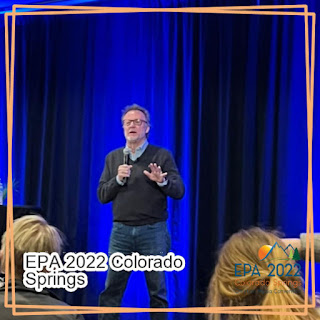
After a two-year delay because of the pandemic, last week the Evangelical Press Association meetings took place in Colorado Springs, Colorado. While I'm a former board member of the EPA and have worked planning a number of their conventions, I had not been to one of their meetings in 20 years—because I'm mostly in the book world with some continuing magazine work. It was a great experience to return to a live event. In this article, I want to give you some of the distinctions and value of these opportunities.
 
The Give and Take Conversations
 
Whether you are standing around drinking coffee at a break or meeting people around you during a workshop, there is a give and take in the conversation that does not happen on the phone or virtually but does happen at live events. I saw a number of old friends and had the opportunity to get an update, hear about their work, tell them about some of my work and exchange business cards (because this information often changes over the years). A number of these people I had not encountered face to face in years and the exchanges were priceless in my view. As I've often said in this publishing  business, who you know is almost as important as what you know. These types of exchanges happen over and over during these types of events.
 
Meeting and Making New Friends
 
Whether I was sitting at a meal at the event or any other place, these events give the opportunity to get acquainted and learn about each other and exchange business cards. In a publishing world that is often saying “no” or sending a silent rejection (no response), I was one of the few (if not the only book acquisitions editor) at this event. I made a point to often say and show that I am actively looking for new authors and new books. Who knows what will come from it but I was certainly trying in my conversations and actions to open the doors of opportunity.
 
The Opportunity to Teach
 
At the EPA meetings, I taught two workshops—one on social media and a second on book proposals. The first one on social media was a part of the overall conference with a much larger attendance. The second one about book proposals was added to the schedule when the overall event was delayed two years with the pandemic. For each of my handouts and presentations, I appreciated the opportunity to give back to others and provide value from my resources and experience. I also appreciated the opportunity to hear other speakers and workshop leaders. I found great value in attending different workshops during the event.
 
Open to the Unexpected
 
I made a point to introduce myself to several of the main speakers at this event. To my surprise, one of them followed my work on social media and was appreciative of what I do in this area. Until I had this exchange face to face, I had no idea that he was aware of me and my work. I suspect there will be opportunity to work together in the days ahead—particularly if I follow-up (which I will). From attending live events for years, I know the follow-up emails and other connections are some of the most important actions for anyone attending these events.
 
In the next few weeks, I will be attending other events. Follow this link to my schedule and I hope to see you at one of these events and talk face to face.
 
There were many more things which come from these live events but these are a few of the distinctions from these opportunities. What am I missing? Let me know in the comments below.
 
Tweetable:

Live events have returned. This prolific editor and author explores why live events are valuable. Get the details here. (ClickToTweet)

Does your fiction or nonfiction book have a business plan? Every type of book needs a proposal—even if you self-publish. Get this resource.

Labels: , , , , , , , , , , ,

____________________________________

Sunday, March 03, 2019


Take Action After a Conference


Last weekend I attended a one day, local writers conference. It was a sold-out event and many writers attended this event throughout Colorado and came from 12 other states. 

During this event, I met a number of people and had a number of opportunities—-which I know will disappear without my follow-up actions. In this article, I want to give y0u some ideas about what I learned and will be doing from this one day event. Whatever your experience level in publishing, you can seize many opportunities—but only if you are prepared ahead fo the event.

Whenever you attend a conference, it's important to bring plenty of business cards and exchange them with everyone you meet. Make sure you don't just give them a card—but you ask (and receive) a card from them. This stack of business cards will be an important part of your follow-up process. 

After I meet someone, I will often make a little note on the business card of some follow-up action that I need to later. These events are intense contact with person after person and you can miss a critical idea if you don't write down something to remind you later. The day included many interactions with a variety of writers and I'm capturing a few of them in this article.

Here's some of the people I met at this one day local event:

1. I spoke with several brand new writers. One in particular was trying to figure out where to begin the writing process. As you know from reading these articles, I encouraged her to write magazine articles. She did not have a business card to easily give me her contact information (something common with new writers). I took down her information and promised to send her some information.

2. I found a possible local media contact. In the back of a workshop before it began, I exchanged business cards with someone—and read they were a local radio talk show host. I'll be following up to see if I can get booked on this program later this year.

3. I found some possible new authors for Morgan James. Throughout the day, I met several new writers and listened to their pitches and took their proposals. I will be following up with them to see if they are a good fit for Morgan James Publishing.

4. I saw a long-time literary agent friend. When I attended her workshop, she told about publishing her first book in April. We spoke privately afterwards and I told her about Goodreads. She mentioned that she had not done much with Goodreads and I offered to send a handout on Goodreads. I have this handout online and knew where it was so shortly after our conversation I sent the material in an email on the spot (so I did not have to remember to do it later). She got it while at the conference and thanked me for it. It's another way to handle these types of matters—often the sooner the better.

5. Learn from the different giveaways at the event. One of the keynote speakers gave away a free download. I wrote down the website, downloaded it and have printed it to read it carefully. Another exhibitor gave away a flash drive which has “writing resources.”  I gave them my name and email address to get the flashdrive (which is a wise marketing strategy to capture email addresses). I will be checking out this flash drive and learning from it. This type of learning is one of the actions I consistently take after a conference. Some people will sign up for the flashdrive (give their email like I did) then take it home and never put it into their computer to use the resources. I recommend when you go to these events, you learn from every possible source.

Are you scheduled to attend a conference in the next few months? Follow this link to get some of my recommendations for conferences. Also you can follow this link to see where I will be speaking and attend.

From my experience, many people attend these events, take notes in the workshops and never do anything with it to move their own writing life forward. I've listed a few of my actions from this event. It is a critical part of the process. If you don't take action then things slip through the cracks and never happen.

What actions do you take after a conference? Let me know in the comments below.

Tweetable:

What actions do you take after a one-day conference? A prolific editor and author gives you some ideas here. (ClickToTweet)

 AddThis Social Bookmark Button


Labels: , , , , , , , , , ,

____________________________________

Sunday, June 17, 2018


Four Actions After A Conference

The Billy Graham Center at Wheaton College

This weekend I traveled home from Write To Publish, held on the campus of Wheaton College at the Billy Graham Center. Off and on, I've been going to this event for many years but had not been for two or three years. Throughout the event, I spent time with old friends, met many new ones and spent several intense days talking about publishing and writing and books. 

Often these events are filled with writers attending their first conference. Others attend each year to give a boost to their writing. These writers come with their writing and their dreams and plans to speak with editors and agents during the event. As an editor, I taught a few classes during the event but also met with numerous writers one-on-one listening to their pitches and helping from my years of experience.

I heard some remarkable stories and pitches. From others I heard about their heart-wrenching stories about their struggle to get published and find the right place for their work. Throughout the event I listened and spoke with them. Admittedly these events can be overwhelming when you return. The world of publishing contains many different opportunities and a wide variety of publications and publishers. When you are overwhelmed, one response is to spin and do nothing. My encouragement is for you to take action and here are four steps:

1. Take time for reflection. Which opportunities did you hear about which you want to do? Make a list of these publications or publishers, and then reconnect with the editor.

2. Review the editor's guidelines or theme list. Are you writing something that they want or are seeking? If so, read through your book proposal or query and send the editor what they requested. Throughout the event, I heard about some great book ideas—nonfiction, fiction, Christian, general market, and children's books. Some people handed me a paper copy. In each case, I asked them to email the material to begin the process. A few writers emailed the material during the event (very few). A number of them will go home, revise and improve their material, then send it to me. Others will never respond. 

3. Organize your business cards and contact information. Get it in a form you can access quickly. We work with people who we know, like and trust. A business card with an email and phone is a great first step, but add the information into your address book. You might not need it now but you may need it several months from now and want to be able to easily access it.

4. Apply what you have learned to your writing life. Throughout the conference, I taught three different workshops (social media, book proposals and Goodreads). It is wonderful to learn about these topics and listening to the information is the first step. Yet your actions after the conference are critical to your writing success. In each of these workshops, I gave specific action steps for the writers to do. The writers who take these actions steps will move forward with their writing and be closer to achieving their dreams and plans.

During the conference, I met several editors and learned about publications that I want to write for in the months ahead. I am taking my own action steps to move ahead for these dreams to become reality.

5. Bonus action. Reach out to some of the people you met at the conference and write them right away via email or even snail mail. It will do a great deal to foster and build your relationships. 
What steps to you take after attending a conference? Let me know in the comments below. I look forward to learning your action steps.

Tweetable:

When you return home from a conference, what actions do you take? Get four ideas here. (ClickToTweet)

AddThis Social Bookmark Button

SocialTwist Tell-a-Friend

Labels: , , , , , , , , , ,

____________________________________

Sunday, May 20, 2018


Four Ways to Prepare for a Conference


For many years, I've been attending and teaching at conferences. Many of the articles that I've published and the books that I've written have their beginnings with someone I met at an event. If you have never been to a writers conference, I encourage you to make plans and attend one this year.  It will boost your writing life to a new level and help you on a number of different fronts. A number of the people at each conference have never been to a writers event and it is their first time. If you are holding off going to a conference because you've never been, do it. It will change your life and propel your writing forward.

Editors and agents work with people that they know, like and trust. Yes we get tons of pitches and proposals on email and online and in the mail. But if you have met an editor or agent at an event, maybe even eaten a meal together or sat in one of their classes, the relationship goes to a new level of depth. Many of those relationships begin at conferences.

As an editor, I've been preparing for several events, updating my handouts, critiquing a few manuscripts for people I will meet and gathering my business cards and other materials for the events. I always bring plenty of business cards to handout.  Numerous times at conferences I've asked an editor or an agent for a business card. This person forgot their cards and had two or three and they've already handed them out. I do not want to be one of those types of editors so I make a point to bring enough.

For the person attending the conference, I want to give you several ways to prepare for the conference:

1. Study the conference program ahead of time. Make some initial choices about the classes you will attend. Also notice who is coming from different publications and publishers. Be aware of their names and positions so when you run into them in line or in the dining room, you can begin a conversation with them.

2. Prepare pitches for particular editors and agents. You will see some of the faculty are more relevant to your writing than others. Create a small list of people you want to set appointments or sit at their table during a meal. Because of the weight, editors and agents are some times reluctant to take a full manuscript but they will often take a “one sheet” (where you summarize your idea on a single piece of paper with your contact information—including email and phone). I always like to see as much as someone wants to show me. I will often take full proposals or manuscripts home with me (if available). Or some authors bring their material on a flash drive to give to editors and agents.

3. Create and bring business cards. Even if you have never been to a conference, create a business card with your name, email and phone number. Also I like to include a mailing address so I can see the time zone where you live. Also if you have a current photo, include it on the card. Bring plenty of cards and hand them out generously throughout the event. In my view, it is always best to trade cards. You give the editor one of your cards and you get one of their cards.

4. Bring an attitude of learning and listening and taking action. Throughout the conference, you will learn new things, write them down in a little notebook. Ideas and requests should go on a separate page that you can cross off as you handle them when you return home. As a writer, you have invested a lot of time and money to attend these events. One of the best ways to get your value from the event is to follow-up and send the requested materials. If you take these actions, you will make a positive impression on the agents and editors that you meet at conferences.

Some people wonder how my writing has been published in more than 50 magazines and I've written more than 60 books. There are many reasons but one of the main ones is my follow-through. If someone asks me for an article or a proposal, I send it to them after I return home. You'd be surprised at the lack of follow through from others at the event.

Are there other keys to prepare for a conference? Tell me in the comments below.  

Tweetable:

What are four ways you can prepare for your next conference? Get specifics here.  (ClickToTweet)
 AddThis Social Bookmark Button

SocialTwist Tell-a-Friend

Labels: , , , , , , , , , ,