____________________________________

Sunday, March 29, 2026


It Only Takes One


By Terry Whalin @terrywhalin

As an author, on the surface some of my actions look like failures. Then I have to recall that it only takes one new connection to make a difference. Like the image I have for this article with the highlighted puzzle piece. Without this final piece, the puzzle does not work or look whole.

A couple of months ago, I spoke at a Publicity Club meeting. Before the meeting, I promoted it on social media to my various connections. Also I added it to these articles in The Writing Life which each week reaches several hundred people on their email. When the event happened, a small audience of  six people attended. 

As a speaker, I’ve had this experience in the past. For example, at a large conference where each workshop is recorded, I’ve spoken in a packed room where they are dragging in chairs from another room. At this same event and on other years, I’ve spoken with one or two people for my audience. No matter how many people, each time I speak with enthusiasm and insight. You never know what can happen with those people in front of you.

Let’s go back to the publicity club event with a small crowd. During the event, I gave them my Morgan James Publishing contact information and encouraged their submission. It’s something I do often in these meetings. When I receive an email submission, I like to process it as soon as possible but that doesn’t always happen. Sometimes that submission gets stuck in the draft folder of my work email.

On a regular basis, people read about my special offer on 10 Publishing Myths where they can get my printed book for only $10 including the shipping along with over $200 of free bonuses. Like some of you, occasionally I have some technical issue that prevents me from mailing the book right away. During one of my tech challenge periods, an attendee from the Publicity Club ordered my book. After it didn’t come for several weeks, she followed up and asked about her printed book and mentioned she had a young adult novel. 

I looked through my records, found the missing entry, packed a book for her and put it into the mail. Also I followed up about the young adult novel and asked her to send it to me. That same day she responded that a month or two earlier she had already sent me her submission. When I searched for it, her submission was stuck in my draft folder. I moved the submission forward through the process.

Speaking with this author, I learned this submission was the second book in a trilogy of novels. The author had self-published the first and third novel in the series. She sold a substantial number herself but taken these novels out of print. Other in the publishing community had told her that no publisher would be interested in re-releasing these self-published books. That information about publishing wasn’t true. 

Also I learned this author had extensive writing and publishing experience. Publishers including editors like me are actively looking for these types of authors. I encouraged this author to send me the details I needed to champion her book to my publishing colleagues. I wanted to try and get a book contract for the first novel in the trilogy.

Last week I learned my colleagues agreed and wanted to offer this author a contract for her young adult novel. Nothing has been finalized with this situation and the contract hasn’t been signed. I understand authors have many publishing options. I believe Morgan James Publishing offers the best path. Not everyone agrees with me and that is OK too.

Ive written a number of details in this story for several reasons. For every author (even the unpublished or traditional published), there are insights:

1. It only takes one person in the room to respond to your teaching for it to be worthwhile. When you teach, you don’t know who will be that person.

2. No one can know the needs or intention of another person unless you talk and listen to them then follow through with action.

3. Every author has to explore many different options to find the right path for their book and readers. You have to learn the information, then actively use that information. It’s worthless to have results if you don’t do something proactive.

4. On a consistent basis, keep making new connections and offering to help others. You never know where those connections will lead or when one of them will become significant. Use LinkedIN or online groups or in person meetings to expand your connections to the world.

5. When you submit and do not hear any response, use the gentle follow-up with that professional. Did they receive your submission? Do you need to resend it? Unless you ask, you have no idea what that other person is going through. A simple question could lead you to a remarkable opportunity.

6. Persistence and consistency pays off. Whatever you are writing, take the long view. At first, it may look like nothing is happening but keep at it and if you don’t give up, you will find the right open door.

Where are you getting silence or rejection? How are you expanding and using your connections to reach more people? Let me know in the comments below. Remember: it only takes one.

Tweetable:


My Writing In Other Places:

With these articles, I encourage you to publish your work beyond your blog in other places. Below are three articles which were published in other online locations than this blog.


Each month I guest blog on Writers on the Move. This month I wrote about how new habits and experimentation can increase the productivity of your writing life. You can read this article at: https://bit.ly/4rvr8GN  


Also each month I guest blog on the Blue Ridge Mountains Christian Writer’s Conference blog. I wrote about the importance of boundaries in your writing life at: https://bit.ly/4t1eD7i 


Finally once a month I guest blog about book proposal creation on Almost An Author. This month I answered the question, How Many Pages in a Book Proposal? at:  https://bit.ly/41whrgH 


During my decades in publishing, I’ve co-authored over a dozen books and reviewed thousands of submissions (no exaggeration). As a part of the process of working with these authors, I speak with them about their dreams and plans. Many of these authors have  unrealistic expectations about what will happen with their published book. Many aspects of the publishing process are outside of anything an author can control. I wrote 10 PUBLISHING MYTHS to give authors practical help. You can get decades of insights in 10 PUBLISHING MYTHS for only $10, free shipping and over $200 of bonuses. 


Do you need a better submission? I’m teaching a free Live Webinar on Tuesday, April 21st at 6 pm Eastern. I’m an acquisitions editor at my third publisher and have reviewed thousands of submissions. Register and details at: https://bit.ly/4lIx91y


Subscribe to Terrys Newsletter:

During the last year, once a week I’ve been sending a short free newsletter. Just follow this link to subscribe. When you are added to the newsletter, you will receive a FREE 87-page Ebook which is packed with insights for every writer.

Get these articles on your email

Since 2004, I have blogged about The Writing Life over 1,800 entries and one of the top 27 content writers. With this simple form, each week you can get my new articles, encouragement and insights at: https://t.co/W6uU64u6aA

Labels: , , , , , , , , , ,

____________________________________

Sunday, August 24, 2025


Every Book Author Needs a Team


By Terry Whalin @terrywhalin

In the publishing community, there is an explosion of self-publishing. Author struggle to build reader connections or a platform--click for an explanation). They struggle to write a proposal which catches the attention of a literary agent and a traditional house. They decide to follow the bandwagon of others and self-publish. What they dont consider is that because they self-published, they have established a visible sales record for others in publishing to see through bookscan. This record could affect the response from agents and editors when they pitch another book project. 

One of the greatest challenges for those who self-publish is what actions to take when something goes wrong. Where do they turn and what sort of extra time and money do they have to spend to fix this situation? In this article I want to tell a couple of stories and give you some reasons for having a team.

The Value of a Team

As an acquisitions editor, I work with my Morgan James Publishing authors until they sign and return their contract. At this point, other colleagues take over the responsibility for producing the book. Im still available to my authors but often I dont hear from them unless there is some issue.

One of my childrens book authors reached out to me about the pre-sale information in her book listings had some misspellings. I wasnt sure how to fix this issue so I reached out to a colleague and asked for her help. She quickly pinpointed the issue was in the metadata. This technical information is data that our team creates about the book then disperses it to a series of online bookstores throughout the world. With the work of producing almost 200 books a year, one of our team members works on metadata full-time. In a short amount of time, this team member fixed the metadata and showed us her revision. When she sent the revision, she told us that it would take several days for this information to populate the different bookstores and if it wasnt resolved in three or four days, to reach back out to her again. The revised metadata corrected these misspellings so my author could promote her book on these bookstores without concern about the incorrect words for her book. 

It took me a bit just to explain what steps we took to correct this metadata error. Now imagine if you were self-publishing and trying to fix it. The task would be huge without a team to help you.

I want to tell you about another Morgan James author I connected with during a writers conference. With a lot of distress, she told me about a series of typos in her book. This author paid an editor to fix these errors yet they were in her printed book. I empathized with her situation but wanted to know the details before I did anything. I asked this author to send me a copy of her book and mark the various errors in her book. 

When this author followed through and mailed a print copy of her book (an important part of the process for every author--follow through), I learned she had 15 errors in a book that was published several years ago. Armed with these details I reached out to my Morgan James colleagues to see how we could fix these errors. When this happens, the author normally pays for these corrections. For this author, I learned we didnt have a lot of copies in the warehouse or bookstore. Also this book was agressively priced when released and the price of paper has increased so it would be a help to the author and Morgan James to raise the retail price on this book. The typos could be fixed in this process. I gathered the necessary internal documents and sent them to this author. It took a few weeks but she filled out the paperwork and returned them. Now these corrections are in production along with other details such as the raised retail price. 

I told this story for several reasons. Every author needs a team to help them with the details for their book. It takes cooperation from multiple people to fix these situations. At the end of the day, the author will have positive feelings about Morgan James and her book to be marketing and promoting it (which every author must do no matter when your book was published). At the conference, this author told me she was writing a second book. Before these errors were fixed, I dolubt she would have considered publishing again with Morgan James but now hopefully she will give us another opportunity to work with her. The relationship and the details are important. 

Finally, every author needs a champion inside the publishing house to help them navigate the relationships. Ive published where my champion (acquisitions editor) has left the company. Within publishing we call this book an orphaned situation (not where any author wants to be with their book). Without a champion, many details on that book were lost and it did not succeed/ sell. 

As a book author, do you have a team? If not, how can you build or find one? If you want to explore working with Morgan James Publishing (follow this link because my contact information is at the bottom of the second page). I look forward to your comments and insights.

Tweetable:


A key part of the writing life is a word I don’t really like but do: the discipline of consistently writing. A blog is an important part of this process for me. Many authors have an unrealistic idea about the details of publishing. 10 PUBLISHING MYTHS is a practical easy reading book to help you. Get my decades of insights in 10 PUBLISHING MYTHS for only $10, free shipping and over $200 of bonuses.

Subscribe to Terrys Newsletter:

During the last year, once a week I’ve been sending a short free newsletter. Just follow this link to subscribe. When you are added to the newsletter, you will receive a FREE 87-page Ebook which is packed with insights for every writer.

Get these articles on your email

Since 2004, I have blogged about The Writing Life over 1,700 entries and one of the top 27 content writers. With this simple form, each week you can get my new articles, encouragement and insights at: https://t.co/W6uU64u6aA

Labels: , , , , , , , ,

____________________________________

Sunday, July 27, 2025


You Need a Valuable Bonus


By Terry Whalin @terrywhalin

Through the years, Ive purchased a number of products online. Many of them include a bonus or several  bonuses as an incentive to buy the product. From my experience, often these bonus items are disappointing and not useful to me. In this article, I want to emphasize how I took a different path with a bonus and why you need to get this book--and the bonus.

In early 2020, right before the pandemic, I was one of a small group of authors who took a three-day book funnel bootcamp in Boulder, Colorado. At that time I lived in Highlands Ranch, Colorado, but during the bootcamp I stayed in a hotel in Boulder. Before arriving at the event, I filled out a detailed questionnaire or advanced homework to make sure I brought what I needed to the bootcamp.

 At this practical bootcamp, we learned how to create an attractive offer for our book along with adding bonuses to the offer. As a group, we worked long hours to get feedback and refine our offer. 

Throughout the bootcamp there was a great deal of learning to use new tools, short lectures from the leaders then practical application of the instruction to your own book funnel. The book funnel involved signing up and using some behind-the-scenes tools to process the book sale. While Ive seen several of the participants drop the product they produced, Im still working and promoting my product. Throughout the process, I gathered a large folder of questions that I answered and tools that I can use when I create my next funnel (which has not happened). 

As I brainstormed my bonuses for the book funnel, I recalled interviewing one of my author friends who has sold thousands of his self-published books to public libraries. There are over 9,000 libraries who have budgets to buy books for their patrons. Online this author located a public list of the contact information for libraries. Taking several hours each day, my friend spent several hours a day calling the library and connecting with the reference librarian on the phone. Then he pitched the benefits of his book with some persuasive bullet points. As he closed his oral presentation, he asked the librarian for the sale and got the information he needed for his invoice. Each day, he would fill out the invoices, package his books and take them to his post office. Throughout my interview, this writer gave me the specifics of what he did to sell thousands of his books to libraries. These details are included in the audio bonus from my book funnel. It is a valuable bonus because any author (no matter how they publish) can use this system to sell their book to libraries.

As you read these details of selling books to libraries, you may be thinking: making all those phone calls and selling my book is a lot of work. From my experience there is no simple way to sell books that does not involve a lot of hard work. To achieve these sales, you will have to step out of your comfort zone, develop an oral presentation about the benefits of your book and sell it to the reference librarian. Your persistent and consistent effort will pay off and sell thousands of books. 

Its another reason for you to order my 10 Publishing Myths book directly from me for only $10 including the shipping along with over $200 in free bonuses (including this audio about how to sell to libraries). 


Through the years, Ive written a number of articles about libraries and the importance for authors. Check out these articles: Get Your Book into Libraries or Learn How to Reach the Library Market. I encourage you to follow these links to the article but also to the additional information and lnks in each article. It is not easy or simple for any author but the opportunity and the possibility is there for you--if you do the work.

How do you determine the free bonuses that you offer with your products? Do you brainstorm them with other writers or do it on your own? Let me know in the comments below.

Tweetable:


My Writing In Other Places:

With these articles, I encourage you to publish your work beyond your blog in other places. Below are two articles which were published in other online locations than this blog. 


Once a month, I guest blog for the Blue Ridge Mountains Christian Writers Conference blog. This month I wrote about A Critical Element of Publishing at: https://bit.ly/4lTPV5H


Also once a month I blog for Writers on the Move. This month I wrote about The Hidden Costs of Publishing. Read the details here: https://bit.ly/40ghu05 


In addition, once a month I blog about book proposal creation for Almost An Author. This month I asked, Trying to Get A Literary Agent? here: https://bit.ly/4f8e3Pb

New Podcasts:

In these articles, Ive encouraged you to use PodMatch or some similar tool to book and record podcasts. Last week another podcast recording launched: 


CJ Johnson (@cj_moneyway) and I spoke about Publishing Success Starts Here: Terry Whalin on the 10 Myths Every Aspiring Author Must Break on The CJ Moneyway Podcast. Listen at: https://bit.ly/4fc2nev 


A great deal of the publishing process is outside of our control as writers. When I speak with authors, I find many of these authors have unrealistic expectations. I wrote 10 PUBLISHING MYTHS to give authors practical help. You can get decades of insights in 10 PUBLISHING MYTHS for only $10, free shipping and over $200 of bonuses.

Subscribe to Terrys Newsletter:

During the last year, once a week I’ve been sending a short free newsletter. Just follow this link to subscribe. When you are added to the newsletter, you will receive a FREE 87-page Ebook which is packed with insights for every writer.

Get these articles on your email

Since 2004, I have blogged about The Writing Life over 1,700 entries and one of the top 27 content writers. With this simple form, each week you can get my new articles, encouragement and insights at: https://t.co/W6uU64u6aA

Labels: , , , , , , , ,

____________________________________

Sunday, June 08, 2025


Why Is Successful Publishing Hard?


By Terry Whalin @terrywhalin

Everyone with a computer believes they can publish their writing. With the proliferation of cellphones, everyone has a computer and a way to “publish” and write. Every writer is on a journey to find the right connection and method to publish then tell people about their writing.

The journey to success is filled with wrong turns and failures--hard results for every person. In this article I want to give you a  bit of a reality check about what is happening and then some practical steps you can take to get on the road to success. 

Just because you can type or speak your words into a computer does not mean your writing is well-done or tells a good story. Storytelling involves understanding structure and how to write words which garner attention. You can practice telling a story orally to a friend or relative. As you tell that story, watch how the other person reacts and responds. Sometimes when I tell a story to my wife, she will respond, “Why didn't you say that in the first place?” It shows I did not tell my story in a straightforward or interesting manner. When you write for a publisher, your storytelling or pitch has seconds to grab the reader. You develop this skill through regular practice and experimentation. 

Another important element preventing successful publishing is not understanding or misunderstanding of the publishing market before you pitch. For example, an author sent me a self-published book that Morgan James Publishing could possibly publish. Most publishers would not consider bringing a self-published book into their system. This book had only been published on Amazon which is a big customer for Morgan James but only 24% of our overall business. This author is missing 76% of where we could sell the book. The book had a lot of merit but one glaring problem: it was only 68 pages long or too short. Most books are spine out in the bookstore and I encouraged this author to add content to the book for Morgan James to consider it.

As authors look over the publishing landscape, they understand traditional publishers are looking for people with large connections to readers (often more than they have at that time). Because they want to get their book published now rather than later, these authors will self-publish. What they often dont understand is that self-publishing creates a sales track record for that book which is publish through Nielsons BookScan (an expensive subscription but something every publisher has access to use). 

Before you fire off that submission to an editor or an agent, take some time to see what types of books that publisher is producing. For example, I recently got a follow-up message from an author about his submission. I commend the fact that this author followed up because Ive been traveling and away from my computer at several conferences and not processing my submissions as quickly as some months. 

From his follow-up email, I located his first email, which I had not opened his submission or read. When I looked at his submission, almost immediately I recognized this author's failure in his pitch. It was a page of poetry without anything additional. In response, I asked for clarification to learn what  he was pitching. It could be a childrens book or a gift book or maybe some other type of book. I could not tell from the outset. It is little wonder this author wasnt finding any interest in his unclear pitch.

Do you know where what you are writing falls into the range of books that are published? Do you have a book proposal or a business plan? Even if you eventually self-publish, I believe successful publishing begins with the creation of a book proposal. Admittedly it is hard work to write this business plan but when you finish, you will understand your target reader and audience, along with your competition and have a written gameplan how you are going to reach this audience. 

Here's the irony related to each of these authors Ive mentioned above and been in touch with recently: in the signature block of my email, I have a link to a free copy of Book Proposals That Sell. This book has over 150 five star reviews and has helped many people clarify their publishing journey. I suspect these authors didn't even touch the link in my signature or read the free book. 

Every author needs to do the hard work to find the right connection and explore the different types of publishing--including Morgan James Publishing. You cant understand the details just reading about it online. The key part of the process is to take action and submit something. There is no cost to explore and understand the process. 

Another element for successful publishing is the marketing or selling of your book to your readers. As I taught at the recent Blue Ridge Mountains Christian Writers Conference in my continuing class, each of us have to try many different aspects to reach our target market. This process involves failure and trial and error along with consistency and persistence. If there were a three or four step formula for success, then every published book would be a bestseller (which does not happen). 

Successful publishing is a journey and you have to take consistent and persistent action to find your path in this process. It takes hard work and continued effort but the only way it can stop and fail is if you stop trying.

As a writer, be commited to continual growth and learning about different aspects of reaching readers. Each of us have a wealth of material in front of us. The key is to do more than cram facts into our heads but to take regular action in your journey. Continually build new relationships and learn from experts. Get to a writer's conference and apply what you learn to your own writing. Read how-to-write books and apply what you learn to your writing life. 

I hope Ive encouraged you to take action. What am I missing in this process and why do you believe successful publishing is hard? Let me know in the comments below.

Tweetable:


My Writing In Other Places:

With these articles, I encourage you to publish your work beyond your blog in other places. Below is an article that was recently published on Almost An Author where I write about different aspects of book proposal creation.


Read Your Proposal Looking for Any Hype at:  https://bit.ly/3HMDFo0 

New Podcasts:

In these articles, Ive encouraged you to use PodMatch or some similar tool to book and record podcasts. Last week two more podcast recordings launched.

Nyomi Banks (@AskNyomi) and I spoke about Creativity Unleashed: Publishing Insights and Self-Expression on The Season of Self Love Podcast. Listen at: https://bit.ly/4jIihxL Then learn more at: http://publishingoffer.com #publishingtip #writingtip

Teri M. Brown (@TeriMBrown1) and I spoke about Ten Misconceptions About Publishing You Can't Afford to Ignore on The Online for Authors Podcast. Listen at: https://bit.ly/3FLIU6T 

Get to a Conference:

One of the best ways to boost your writing life is to attend a writer’s conference. Here’s another possibility for us to meet.

Later this month, lets meet in Oregon. I will be teaching about how to Jumpstart Your Publishing at the Cascade Christian Writers Conference from June 22nd to 25th plus meeting with authors about their publishing plans. Get registered at: https://bit.ly/3Z5dSNF


Many authors have an unrealistic idea about the details of publishing. 10 PUBLISHING MYTHS is a practical easy reading book to help you. Get my decades of insights in 10 PUBLISHING MYTHS for only $10, free shipping and over $200 of bonuses. 

Get these articles on your email

Since 2004, I have blogged about The Writing Life over 1,700 entries and one of the top 27 content writers. With this simple form, each week you can get my new articles, encouragement and insights at: https://t.co/W6uU64u6aA

Labels: , , , , , , , , ,

____________________________________

Sunday, May 21, 2023


The Cost of Publishing


By Terry Whalin @terrywhalin

It is a common question I get from writers, “Does your publishing program have a financial cost?” The answer is not simple and the reality is every type of publishing costs--even self-publishing. Thousands of new books are published every day through the Amazon Kindle program. The costs can be minimal but then you have to reach your audience and sell the book. I often say that making books is easy but selling books is a completely different story.

As an author, you will have to weigh the cost for your path. Ive met authors who have paid over $10,000 to self-publish. By the time, they hired an editor, a cover designer, a layout designer the pages, it cost to get their book into the market. As this friend who spent $10,000 told me, when he looked back, he wished he had gone with Morgan James Publishing because then his book would be in bookstores and not just on Amazon but over 1,800 online bookstores. If you go the traditional route, you will need to create a book proposal and possibly find a literary agent (unless you meet a publisher at a writers conference). 

Even if you traditional publish, you will need to spend time marketing and reaching your audience. Whether your publisher gives you this information or not, understand the majority of the marketing (80%) will be up to you.

As you make your choice about the publishing path, I encourage you to get advice and help from others but be aware that advice could cost you. Recently an author emailed me who had three independent publishing contract offers and wanted my help in a phone call. I responded and was willing to help--but not for free. 

Admittedly I have a lot of free online information through my blog, free ebooks, my newsletters and other places. Yet when you are looking for my specific help for your contracts or publishing advice, I encourage you to expect to pay something for that help. From my decades in this business, the cost is minimal for the savings and value you will receive.

I compare such a request to having a friend who is a physician and youve gotten ill and need a prescription, you would not expect this friend to help without charging. Why would you expect it for a publishing question? Yet this author wrote me assuming I would call her, freely giving my counsel without charge. It is not a realistic expectation. Even if you publish with an independent publisher like Morgan James Publishing, it will cost you.

The road isnt easy but success and selling books is possible on any of these paths. The exploration process costs nothing other than your time. What process do you use to count the cost of publishing? Let me know in the comments below. 

Tweetable:

Labels: , , , , , , , , ,

____________________________________

Sunday, March 20, 2022


Publishing Takes A Team


By Terry Whalin @terrywhalin
 
On the surface, it is often not clear but sucessful publishing takes a team. The work of a writer is a solitary task where you understand your target audience (reader) and craft your words into a manuscript for various publications. As I've mentioned in the pages of these entries, your relationships with others is a critical part of this process.  I understand many writers have chosen to self-publish which is definitely a choice but in this article I want to give several examples of why you need a team.
 
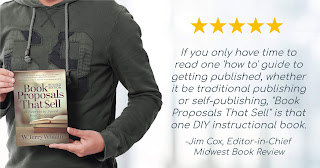
The team can get your book reviewed in respected journals. For many years, I've read the monthly Cox Report from Midwest Book Review. On their site, they have submission guidelines and I've sent a few of my books to them but (like every review outlet), they receive thousands of books and only pick a few to review. Months ago, Morgan James Publishing submitted my Book Proposals That Sell (The Revised Edition) to Midwest Book Review. Getting the book to the right person is a critical part of this process. Jim Cox selected my book to review. As I read the Cox Report, I grateful for the team and that my book was reviewed. You can read the full review here but here's the section that stood out to me: “Critique: Simply stated, if you only have time to read one 'how to' guide to getting published, whether it be traditional publishing or self-publishing, "Book Proposals That Sell: 21 Secrets to Speed Your Success" is that one DIY instructional book. Exceptionally well written, organized and presented, it can help the aspiring writer to avoid costly and time consuming mistakes with respect to getting published and having that published book brought to the attention of its intended readership.”
 
To get such a review was a feat of the team effort, but using this review on an on-going effort for the book is also important. I continue to use the review from time to time in my social media feed and other places plus I used some of the words to create a unique image. You can use these tools as well and get lifetime access if you follow this link. I use this tool several times a week so it has become an important part of my regular work.
 
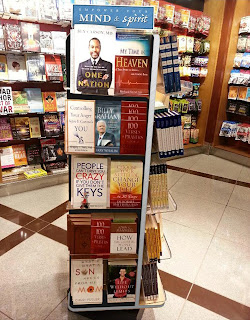
As I've mentioned in these articles, thousands of books are published every day. Many books never appear inside a brick and mortar bookstore and are only sold online. As someone who has been in publishing for years, you want your book in many different places—brick and mortar as well as online. You have to be with the right publisher to get your book inside a bookstore. Several years ago, I was going through the Philadelphia airport and missed my connection. I spent the bulk of that day inside the airport waiting for my next flight. Out of sheer boredom, I went into the airport bookstore to look around and found my Billy Graham biography. Notice this picture from inside the airport bookstore. Over the years, I've seen numerous Morgan James Publishing books inside the bookstore. You have to be working with the right publisher for this placement to happen.
 
Over the last ten years, I've brought numerous authors and books to Morgan James Publishing (follow this link and my contact information is on the bottom of the second page—email and direct phone). If I can help you, don't hesitate to reach out to me. I'm always looking for the right authors and books.
 
I hope through these examples, you understand publishing is a team effort and you need to be with the right team. How have you seen publishing takes a team? Let me know in the comments below.
 
Tweetable:

Each month I write an original article for the BRMCWC blog. Writer, What Is Your Side Hustle? I hope it gives you some new ideas for your own writing life. 

Labels: , , , , , , , , , , ,

____________________________________

Sunday, December 06, 2020


An Example of a Missed Opportunity


By Terry Whalin @terrywhalin


Over the holiday break, I have been reading What Are the Odds? by Mike Lindell. You've probably heard of him or at least seen his MyPillow commercials. I do not know Mike Lindell but I enjoyed and recommend his book—yet it is filled with missed opportunities because he self-published it. In this article, I want to point out some of the flaws in this book and missed potential. Why write such an article? I do it so you can learn some of the critical elements in book production. Even if you self-publish your book, you can produce a book that looks exactly like any well-known publisher. To achieve this result will take planning and intentional forethought on your part.
 
Books have standards in how they are put together. If you violate the basics, it will make your book stand out in a negative way instead of helping it succeed in the market. You don't want readers to wonder why you missed some element in the production. Instead you want them to simply accept the book, read it and tell others about it. One of the most difficult things to proofread during production is to notice missing elements. What Are the Odds? is missing a number of standard book items including:
 
No back cover copy. The words on the back cover are sales copy to entice readers. They often include endorsements and other details. Instead What Are the Odds? includes a second holographic image which is different from the cover.
 
No barcode on the back cover. A properly done barcode is important for retailers to effectively use the book. because this book only had a holographic image, it did not have a barcode to help retailers sell the book—a glaring production error in my view.
 
No author name on the spine of the book and instead it included the subtitle. Most books are spine out and the authors name should be on the spine instead of the subtitle.
 
No endorsements. While this book includes a Foreword by Dr. Ben Carson, there are no endorsements inside the book or on the back cover. People buy books because of these endorsements and they are an important missing element.
 
Missing information on the copyright page. While this book includes a copyright page, it includes Bible quotes but no reference to the translation used (normally on this copyright page). Also throughout the book, Lindell includes lyrics from a number of well-known artists and songs. If permission was secured, it is normally pointed out on this copyright page and nothing is said on this page about permissions.
 
No table of contents page. While the book includes divisions and titles for each chapter. There is no table of contents page with numbers to help the reader.
 
No appendix or cross-promotion with MyPillow.  What Are the Odds? includes no advertising or promotion for Mike Lindell's MyPillow company or his foundation for addiction or any number of other things he could have included in a simple appendix. This book does not contain an appendix.
 
I learned about this book because I am a long-time subscriber to Publishers Weekly. Each issue of PW has a front and back cover and the responding inside pages in full color. This space is advertising space that some individual (like Mike Lindell) or a publisher to buy or advertising space. You can learn more details through their media kit (but does not include the prices). When I saw the retail price for this book: Hardcover $39.99 or Softcover $29.99, I looked on my local library to see if I could order the book—which I could. It's how I read the book. Lindell is a Christian and the book is distributed through Broadstreet Publishing.
 
Why Did I Read This Book?
 
I love biographies and have written a number of these types of books. The stories of changed lives always fascinates me. Mike Lindell has a dramatic story and the storytelling in this book is well-done and worthwhile reading. Inside the book a number of interesting sections of full color photos and captions are included. Yet the production problems detract from the reading experience and will frustrate many readers. Some of the missing elements like the missing barcode will frustrate retailers so they will be hesitant to carry the book. What Are the Odds? does have it's own website.
 
I wrote this article as a cautionary tale for authors. No matter how you publish your book (even self-publishing), you need to take charge of these various elements. As the author, it is up to you to make sure you are producing an excellent finished book which will be accepted by the publishing community (bookstore retailers and others). The lack of these critical elements is a huge error—which could have been fixed in production but is hard to fix after the book is produced. I hope it will help each of you seek good counsel and not make these errors.
 
Have you read What Are the Odds?  Did I miss some other missing element? Let me know in the comments below.
 

Labels: , , , , ,

____________________________________

Sunday, November 08, 2020


Writers Need Each Other


By Terry Whalin @terrywhalin

 
Alone with our keyboard, every writer creates stories, articles and other types of communication. Yet without readers of those words, the stories have little impact on others. I understand it is hard to get an editor's or literary agent's attention to get your material on the road to publication. Part of this frustration is why self-publishing has exploded with 1.6 million self-published books a year. Yet many of these books are poorly produced and only sell 100 to 200 copies in the lifetime of the book (not a good path in my view and filled with companies who will gladly take your money with poor results).
 
Early on in my writing life, I learned that other people's input into my writing improved the results. Each of us have blindspots with our writing (no matter if we are beginners or have been writing for decades). Every writer needs an editor to go through their work in detail before it is published. I understand the business is subjective and you have to find the right editor for your work but it is an important part of the process. The best kind of publishing from my experience is using a team of people.
 
The writing community is an important part of the process. I learned early on to connect with others via email or phone or in person—and to maintain these relationships. I started writing for publishing decades ago in high school on my newspaper then worked for the local newspaper. While I have a college degree in journalism, I put my writing on hold for ten years while I was living overseas and working in linguistics. 

Years ago a friend showed me how to write a query letter and pitch magazines so I could get assignments. Then I went to my first writer's conference and met editors and literary agents. It opened the door for my first book which was published in 1992 (and long out of print). One of my writer friends recently showed me a current outrageous price on my first book from a retailer.
 
When I joined a critique group, my published writing took a leap forward. It was a regular forum to gain insight from readers and also a consistent deadline for my writing. If you have never joined a group, I recommend you follow this link and read the details of how to join or create a group.
 
There are many ways to support other writers in the publishing process. It might be as simple as being in a critique group with them. Or you could read their book, then write a review. People are making buying decisions every day after reading reviews. It's one of the reasons I've written over 1,000 Amazon reviews because it is a way I can support other writers. You can also subscribe to their newsletter (then when it comes pass it on to others). You can reach out to others with a phone call or email to check in with them—and see how they are doing with their writing. Admittedly 202o with a world-wide pandemic has been a strange year but you can do this sort of networking effort any time and any year.
 
Look for ways to volunteer and give back to others. As you give to others in these ways, you join the community of authors—and yes giving will come back to you multiplied is my view. I've given you a few ideas in this article. The bottom-line is we need each other. What steps will you take today to encourage and reach out to other writers? Let me know in the comments below.
 
Tweetable:

Labels: , , , , , ,